




Australian businesses are investing heavily in AI and automation platforms. AI-related spending reached an estimated AUD $3.5 billion in 2024, growing 20% year-on-year, and analysis by the CSIRO found that up to 68% of Australian businesses have now adopted some form of AI or automation technology. However, adoption alone does not guarantee results.
As businesses add more software to manage sales, marketing, finance, customer service and operations, a structural problem has emerged; most systems do not communicate with one another. Teams still spend hours manually moving information between operational platforms, updating spreadsheets, sending follow-up emails and chasing approvals. According to McKinsey, approximately 60% of occupations have at least 30% of activities that could be automated using currently available technologies. Hence the question is no longer whether to automate or not, but how.
This is where no-code automation platforms come in. By connecting applications, automating repetitive workflows and increasingly leveraging AI-powered decision-making, these tools allow organisations to achieve more without growing headcount. Whether you are a startup trying to scale, an SME looking to reduce administrative overhead or an enterprise managing cross-departmental complexity, the right workflow automation tools can deliver measurable results.
In this article, we will compare the top five no-code automation platforms for 2026; n8n, Zapier, Make, Microsoft Power Automate and Workato. We cover where each platform excels, where it falls short, who each one is best suited to and how Australia’s evolving regulatory environment should inform your decision.
Consider this before choosing an Automation Platform
Selecting an automation platform based on price or familiarity alone is one of the most expensive decisions a business can make. Migration projects, when the wrong choice needs to be reversed, involve workflow redesign, data migration, staff retraining, governance restructuring and operational disruption. Platform selection if done with careful considerations is going to be a long-term strategic decision.
The following criteria should be guiding your evaluation when selecting a no-code automation platform:
- Ease of Use: Can business users maintain and extend workflows without developer support? Platforms that require technical resources for every change add hidden overhead that erodes the efficiency gains automation was meant to deliver.
- Integration Ecosystem: Does the platform connect natively with your existing CRM, ERP, accounting, marketing and collaboration tools? A broad native library reduces the need for custom connectors and the fragility that comes with them.
- AI Readiness: Can the platform support AI agents, intelligent decision-making and advanced workflow orchestration? As automation moves from simple triggers to context-aware processes, AI capability is increasingly the differentiator.
- Scalability: Will the platform still meet your needs as your automation volume grows? Task-based pricing models that feel affordable at low volumes can become prohibitive quickly or expensive to scale.
- Security and Compliance: Does the platform support audit trails, role-based access, governance controls and data residency requirements? For organisations in healthcare, finance, government and legal services; all under growing regulatory scrutiny in Australia in 2026, this factor should be a priority procurement requirement, not an option you can overlook.
- Total Cost of Ownership: What will the platform cost at one, three or five years of growth? Factor in licensing, implementation, training, potential support costs and migration risk if the platform does not scale with your needs.
From December 10 of 2026, Australia’s Privacy Act amendments (Privacy and Other Legislation Amendment Act 2024) will require businesses to disclose in their privacy policies when automated systems make decision that significantly affect individuals right or interest. If your workflows touch customer or employee data, platform governance will now be a compliance concern as much as an operational one.
The Top 5 No-Code Automation Platforms for 2026
n8n
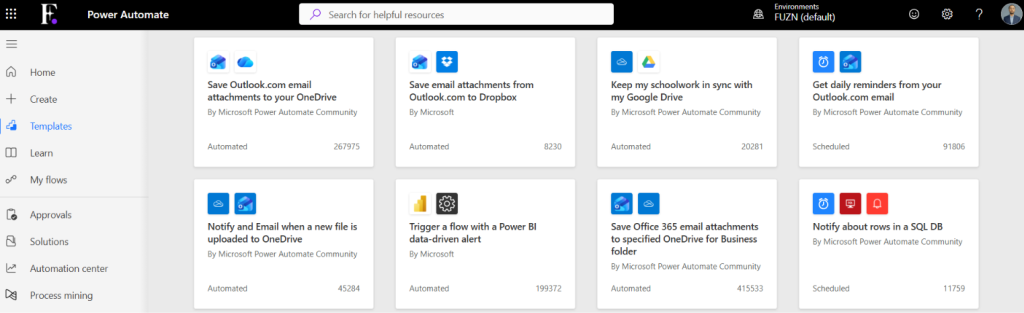
n8n has become one of the most talked about workflow automation platforms not only in Australia but globally because it combines enterprise level flexibility with open-source architecture. Unlike most traditional automation tools, n8n gives organisations genuine control over how workflows are designed, hosted and governed; including the option to run the platform entirely within your own infrastructure.
That self-hosting capability is particularly relevant for Australian organisations in regulated sectors. Under the automated decision-making transparency requirements taking effect in December 2026, businesses that can demonstrate full data sovereignty and workflow auditability will be in a far stronger compliance position than those relying on vendor-managed cloud environments where data flows are harder to control and document.
n8n supports native AI agent workflows, integrates with large language models and is designed for context-aware automation; the kind that goes beyond triggering an email when a form is submitted to actually making intelligent decisions mid-workflow.
Key Strengths
- Open-source architecture with self-hosting options providing you full data sovereignty and infrastructure control
- Industry-leading AI workflow and AI agent integration capabilities
- Advanced conditional logic, looping and error-handling for complex process design
- Lower long-term cost at scale compared to task-based pricing models
- Highly configurable governance, role-based access and audit trail capabilities
Potential Limitations
 Top article todayExcel-to-App Evolution: Why the Transformation Matters for SME’s
- Steeper learning curve than Zapier; structured implementation planning is important for n8n
- Some less common integrations on older legacy require custom node development
Best For
At FUZN we recommend n8n for growing SMEs, technology companies, healthcare organisations, government agencies or any enterprise building AI-powered operations. n8n offers you flexibility on compliance and regulations, future AI capability and future-proofing your automation build without platform limitations.
Zapier
Zapier still remains the most widely recognised name in workflow automation and for good reason. Its combination of a clean, intuitive interface and one of the largest integration libraries in the market means teams can build and deploy automations quickly; often without any technical support at all.
For many Australian startups and small businesses taking their first steps in automation, Zapier removes most of the friction. The learning curve is almost flat. A marketing coordinator can connect HubSpot to Slack to Google Sheets in under 30 minutes using a pre-built template. This speed to value is genuinely compelling when teams are stretched and time is limited.
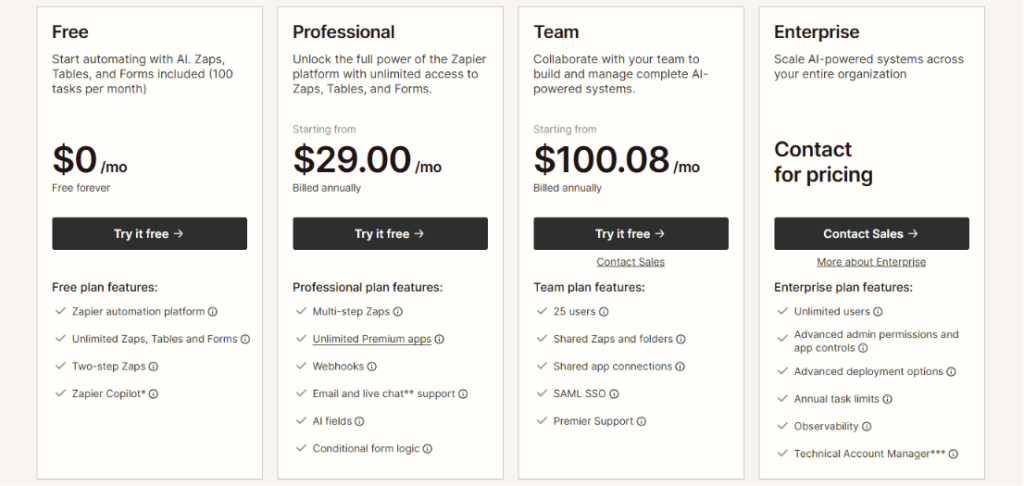
The trade-off however arrives at scale. Zapier’s task-based pricing model can become costly as automation volume grows and its governance and AI capabilities are limited compared to platforms designed for enterprise use. Many organisations start with Zapier and find themselves migrating as needs mature; which is worth factoring into the initial decision-making process.
Key Strengths
- Extremely user-friendly as it requires minimal technical knowledge required to get started
- Massive integration library covering thousands of applications
- Fast deployment with a large library of pre-built automation templates
- Strong community, documentation and support ecosystem
Potential Limitations
- Costs can increase significantly as task and automation volumes grow
- Limited flexibility for complex, branching or multi-step conditional workflows
- Less suitable for regulated industries needing robust governance and auditability
Best For
At FUZN we recommend Zapier for startups, small businesses, marketing teams and non-technical users building their first automations. Zapier is also the best option if your priority is speed and simplicity. Zapier was also my (the author) first hands-on automation tool during college days in 2015, the platform has come a long way but the ease of learning this tool remains the same.
Also Read: Zapier vs n8n for Australian Businesses
Make
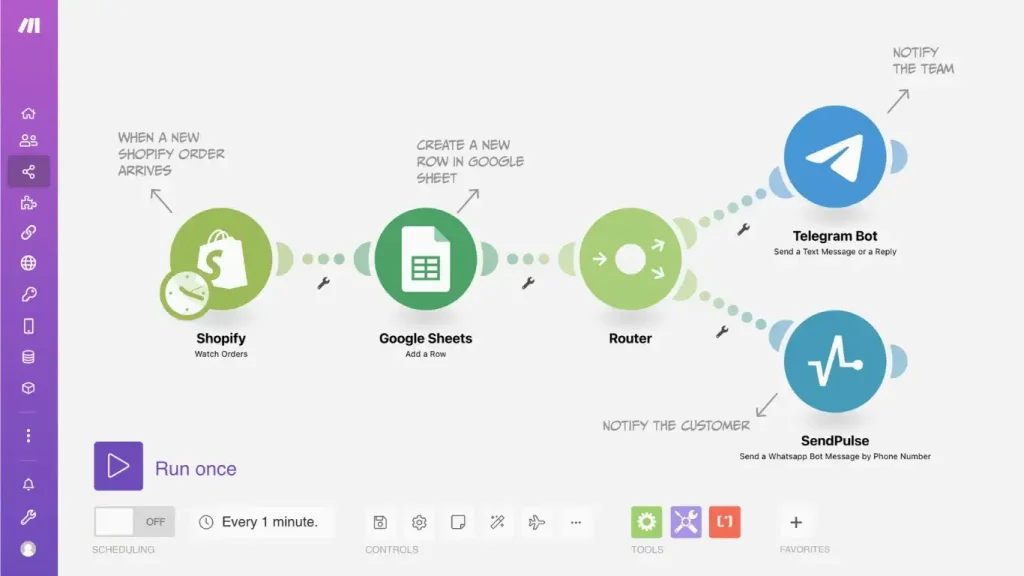
Make (formerly Integromat) takes a different approach to workflow building; instead of listing steps in a sequence, everything is laid out visually as a flow of connected modules on a canvas. For teams who think spatially like operations managers, marketing coordinators and growth teams, this visual approach makes complex workflows considerably easier to build, understand and maintain.
Make sits in the middle of the market in capability terms. It is more powerful and flexible than Zapier but more accessible than n8n for teams without a technical background. Its pricing model is also more cost-effective than Zapier’s at medium automation volumes, making it an attractive option for growing SMEs who have moved beyond basic integrations but are not yet at enterprise scale.
Key Strengths
- Highly visual workflow builder, the logic of complex flows is easy to review and audit
- Flexible scenario design supporting complex routing, filtering and data transformation
- Strong integration support across hundreds of platforms
- More cost-effective than Zapier at medium automation volumes
Potential Limitations
 Read alsoTool-Call Reliability in Production LLM Agents
- Workflow governance can become complex in larger, multi-team implementations
- AI capabilities are not as advanced as n8n for agentic or LLM-driven workflows
- Larger deployments may require specialist oversight to maintain
Best For
At FUZN we recommend Make for marketing teams, agencies, operations teams and fast-growing SMEs that value visual clarity in workflow design. It is ideal for less technical teams who prefer a visual, node-based canvas where they can map out, inspect and troubleshoot branching workflows.
Microsoft Power Automate
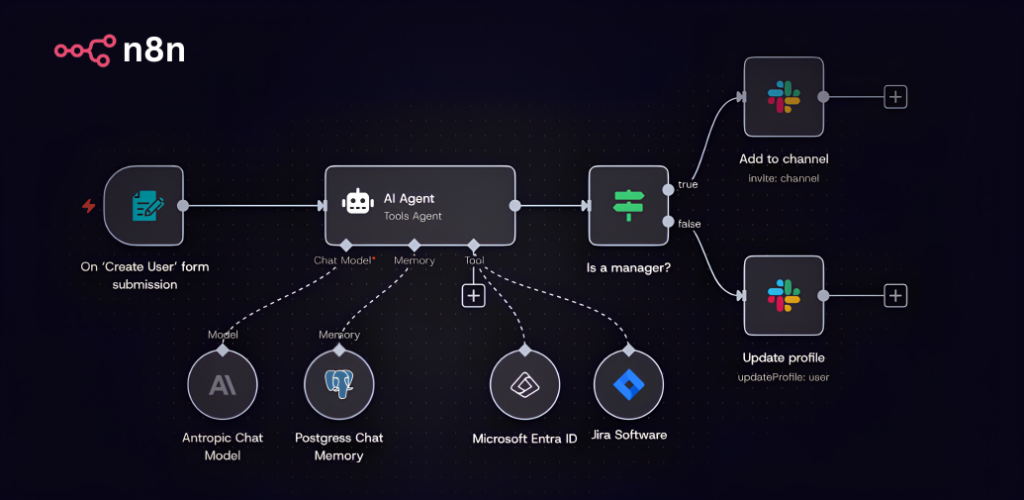
For organisations already running on Microsoft 365; using Teams, SharePoint, Dynamics, Outlook and Azure, Power Automate is the natural automation layer. Hence integration with Power Automate will be native and deep. Workflows can be triggered directly from Teams messages, SharePoint document updates or Dynamics CRM records without custom connectors or additional configuration.
Power Automate also delivers some of the strongest enterprise governance and compliance capabilities in the market. For Australian government departments, financial services firms and enterprise businesses with existing Microsoft licensing, Power Automate can often be deployed at scale with minimal additional cost compared to standalone automation platforms.
The main consideration is ecosystem dependency. Power Automate works brilliantly within Microsoft’s world. The moment critical workflows need to connect deeply with non-Microsoft systems, complexity increases and many of the platform’s advantages diminish. Organisations with a diverse, mixed-vendor technology stack should evaluate this dependency carefully.
Key Strengths
- Deep, native integration across the entire Microsoft 365 and Azure suite
- Enterprise-grade governance, security controls and compliance capabilities
- Strong regional data residency controls, relevant for Australian privacy requirements
- Often cost-effective for organisations with existing Microsoft licensing
Potential Limitations
- Strong dependency on the Microsoft ecosystem, value diminishes in mixed-vendor environments
- Can become complex and expensive when integrating non-Microsoft platforms
Best For
At FUZN we recommend Power Automate for Mid-market businesses, enterprises and government departments with significant Microsoft 365 investment. If Outlook, SharePoint and Teams are tools your team relies on heavily, Power Automate offers so much in comparision to all other automation tools.
Workato
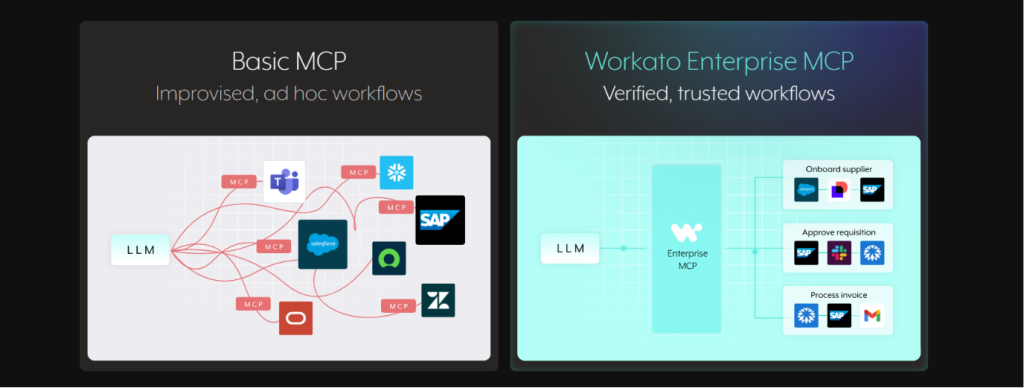
Workato is built for large organisations with complex, multi-system operations. Where other platforms excel at connecting two or three applications, Workato is designed to orchestrate entire business processes across dozens of enterprise systems simultaneously; ERP, CRM, HR platforms, financial systems, data warehouses and much more.
Get the best ones in your inbox — no spam, unsubscribe any time.
For regulated industries in Australia like finance, insurance, healthcare and government, Workato’s governance, compliance and audit trail capabilities match the demands of large-scale operations. The platform supports complex approval chains, role-based access and workflow governance structures that enterprise compliance teams require.
The trade-off is cost and complexity. For most SMEs, Workato will exceed both requirements and budget. It is a platform built for scale and its value proposition becomes clear only when that scale is genuinely present.
Key Strengths
- Enterprise scalability; designed for complex, multi-system process orchestration
- Comprehensive governance, compliance and audit trail capabilities
- Extensive integration ecosystem including enterprise ERP and financial systems
- Strong support for regulated industry compliance requirements
Potential Limitations
- Higher implementation costs as it often requires professional services investment
- Likely to exceed requirements and budget for most SMEs
Best For
At FUZN we recommend Workato for Enterprise organisations, regulated industries and global operations managing complex, cross-system processes. Workato is best suited for projects which require robust data governance, complex system integrations and secure cross-departmental automation; while maintaining strict compliance.
Also Read: Automations Your Organization Can Deploy Today
Use Case Matrix for your operational scenarios
Different business scenarios call for different tools/platforms; as organisations vary in size and one size fit approach is just not relevant in regards to automation. You can use this matrix as a starting point for your initial evaluation. However, your specific technology stack, team capability and compliance requirements will refine the recommendation further.
| Business Scenario | Recommended Platforms | Reasoning |
| Startup Lead Management | Zapier | Quick setup and simple app integrations |
| Marketing Campaign Automation | Make | Strong visual workflow design |
| AI Agent Deployment | n8n | Advanced AI workflow capabilities |
| CRM & Sales Automation | n8n | Flexible logic and deep integrations |
| Multi-Department Operations | Workato | Enterprise orchestration at scale |
| Microsoft 365 Workflows | Power Automate | Native ecosystem integration |
| Finance Approval Workflows | Power Automate | Governance and compliance controls |
| Healthcare Patient Admin | n8n | Data control and workflow flexibility |
| Government Process Automation | n8n/Power Automate | Security and governance options |
| Enterprise System Integration | Workato | Enterprise grade connectivity |
| Customer Service Automation | n8n | AI enabled workflows and orchestration |
| Recruitment Automation | Make | Visual workflow management |
| Inventory & Operations Management | Workato | Large-scale process automation |
| AI Powered Knowledge Systems | n8n | Agentic AI and workflow orchestration |
Australian Regulatory Context for AI in 2026
Australia does not yet have a dedicated AI Act but that does not mean automation platforms can operate in a regulation free environment. Several legislative and regulatory developments in 2025 and 2026 directly affect how your businesses should select, configure and govern their automation tools. Here are few of the regulatory developments, you should be aware of:
Privacy Act – Automated Decision Making Transparency
The Privacy and Other Legislation Amendment Act 2024 introduce new obligations for businesses to disclose in their privacy policies when automated systems are used to make decisions that significantly affect individual’s rights or interests. These requirements take effect in December 2026.
For businesses using automation to process customer data, route support requests, assess applications or manage HR workflows, this means platforms need to support auditability and the workflows themselves need to be documented and explainable. Platforms like n8n, Power Automate and Workato, which offer comprehensive audit logs and configurable governance, are better positioned to support this requirement than Zapier or Make at their standard tiers.
AI Safety Institute – Operational from Early 2026
The Australian Artificial Intelligence Safety Institute (AISI) became operational in early 2026, funded with AUD $29.9 million. Its role includes independent technical analysis of AI risks, monitoring and providing expert advice to regulators and ministers.
 Read alsoStrait of Hormuz Chokehold Warning Lessons for Australian Businesses!
The AISI does not impose direct obligations on businesses at this stage but it signals the direction of regulatory intent clearly. Organisations adopting AI-powered workflow automation today should be building governance structures; documentation, audit trails and human oversight checkpoints, which will withstand increased scrutiny as the regulatory framework matures over the years.
NSW Work Health and Safety Amendment Act 2026
Passed in 12 February 2026, this NSW legislation imposes specific workplace health and safety duties on organisations using AI, algorithms or automation to allocate work. Commencement is by proclamation and other states are expected to follow.
For businesses using automation to manage rostering, task assignment or workforce operations, platform governance and audit capability is now a workplace health and safety consideration, not just an operational one.
Consumer Law Penalties – Doubled from March 2026
The Treasury Laws Amendment (Doubling Penalties for ACCC Enforcement) Act 2026 doubled maximum corporate penalties under the Australian Consumer Law from AUD $50 million to AUD $100 million per contravention, effective March 2026.
If automation platforms are used in customer-facing communications or marketing workflows and claims are made about those systems capabilities that turn out to be misleading, the legal and financial exposure has materially increased. Governance and documentation of what automated systems actually do is no longer optional. Hence, glorifying the automation and AI related outcomes, if they are no on point, can lead to major penalties, which can be detrimental for your business.
“Platform governance is no longer just an IT concern within Australia. As automation becomes embedded in customer interactions, workforce management and business operations, the choice of automation tool and how workflows are documented and governed has direct compliance and legal implications for Australian businesses operating in 2026”
Security and Compliance Comparison
For organisations in healthcare, finance, government, and legal services; security and data governance must be a priority procurement requirement not optional extra you can opt-out of. Here is how the five platforms compare across the criteria that matter most in regulated Australian environments.
| Security Feature | n8n | Zapier | Make | Power Automate | Workato |
| Data Storage | Self-hosted or cloud | Vendor cloud | Vendor cloud | Microsoft cloud | Enterprise cloud |
| Self-Hosting | Yes | No | No | Limited | No |
| Audit Logs | Yes | Higher plans | Higher plans | Comprehensive | Comprehensive |
| Role Based Access | Yes | Yes | Yes | Advanced | Advanced |
| SSO Support | Enterprise | Enterprise | Enterprise | Native (Azure AD) | Enterprise |
| Data Residency | High Flexibility | Limited | Limited | Strong regional | Strong enterprise |
| Regulated Industry Fit | High | Moderate | Moderate | High | High |
| AI Governance | Highly configurable | Moderate | Moderate | Strong | Strong |
| Vendor Lock-in Risk | Low | Medium | Medium-High | Medium | Medium |
n8n stands out for its self-hosting capability and governance configurability, making it particularly suited to organisations that need to keep workflow data within specific infrastructure environments; on-premises, within a private cloud or in Australian data centres. For businesses which must demonstrate data sovereignty, no other platform on this list offers equivalent flexibility as n8n does.
Microsoft Power Automate and Workato, both lead on enterprise governance. They offer comprehensive audit trails, advanced role-based access and regional data residency controls that align with Australian privacy requirements; particularly relevant as of December 2026 automated decision-making obligations approach by the Australian government. Zapier and Make offer adequate security for lower-risk use cases but are not designed for environments where data governance and auditability are critical procurement criteria.
Also Read: Breaking Free from Zapier – Migrate Your Automation to n8n
Automation Platform Comparison Scorecard
The below scores reflect general business use cases, implementation flexibility, AI readiness, governance capabilities and long-term scalability. They are provided as a comparative guide in this article but actual suitability depends on your specific requirements, existing technology stack and team capability.
| Criteria | n8n | Zapier | Make | Power Automate | Workato |
| Ease of Use | 7/10 | 10/10 | 8/10 | 7/10 | 8/10 |
| Integration Library | 9/10 | 10/10 | 9/10 | 8/10 | 10/10 |
| AI Readiness | 10/10 | 8/10 | 8/10 | 8/10 | 9/10 |
| Workflow Flexibility | 10/10 | 7/10 | 9/10 | 8/10 | 9/10 |
| Enterprise Governance | 8/10 | 6/10 | 7/10 | 10/10 | 10/10 |
| Security Controls | 9/10 | 7/10 | 7/10 | 10/10 | 10/10 |
| Self-Hosting Capability | 10/10 | 0/10 | 0/10 | 2/10 | 0/10 |
| Cost Efficiency at Scale | 10/10 | 5/10 | 8/10 | 8/10 | 6/10 |
| SME Suitability | 10/10 | 10/10 | 9/10 | 7/10 | 5/10 |
| Enterprise Suitability | 9/10 | 6/10 | 7/10 | 10/10 | 10/10 |
| Future AI Agent Potential | 10/10 | 7/10 | 8/10 | 8/10 | 9/10 |
| Overall | 9.3/10 | 7.6/10 | 8.4/20 | 8.6/10 | 8.8/10 |
As you see from the table above, n8m leads the overall ranking primarily because of its AI readiness, self-hosting capability and cost efficiency at scale; three factors are becoming increasingly important for Australian businesses as automation grows more business critical, AI driven and subject to regulatory scrutiny.
Also Read: Breaking Free from the Cloud – The Enterprise Guide for Self-Hosted LLMs
Hidden Costs of choosing the Wrong Automation Platform
One of the most expensive mistakes organisations make is selecting an automation platform based on short-term requirements. What works at 10 automations can become a significant constraint and a significant cost at 500 automations. Pricing models that feel affordable early can scale in ways that are hard to reverse once workflows are embedded. You will already be invested too much to revert back, hence early decision making is very critical before you commit on an automation platform.
Migration projects, when they become necessary, typically involve:
- Workflow redesign: Every automated process needs to be rebuilt, tested and validated in the new platform
- Data migration: Historical logs, trigger configurations and integration credentials
- Staff retraining: Teams familiar with one platform’s logic and interface need to learn another
- Operational disruption: Automations that break during migration create exactly the manual workload they were built to eliminate
- Governance rebuilding: Documentation, audit trails and approval structures need to be recreated from scratch
As automation becomes more deeply embedded in business operations; touching customer data, driving operational decisions and supporting compliance processes, platform selection becomes a long-term strategic commitment rather than a software subscription that can easily be cancelled and replaced. Data breaches can be costly for Australian businesses and it can lead to higher governmental oversight and regulatory compliance to adhere to.
The commercial reality of automation is that the cheapest automation platform today can become the most expensive decision tomorrow for your business. Therefore, during the decision-making process, we recommend you to evaluate the total cost of ownership over three years not just the monthly subscription price. Automate but do it wisely!