






How many times have you also started your day feeling like you are drowning in operational quicksand, where every manual task creates two more problems? How often do you wonder if there is a better way to run your business than constantly catching up with your own operations? If you have thought about automating your business, two big names that often player are Zapier and N8N. So, which one should you choose? Let’s compare Zapier vs N8N for Australian businesses
Why should Automation matter for Australian businesses in 2025
Manual workflows steal profit, slow customer response, and fail under the ACCC’s growing push for generative-AI transparency. Australian businesses that layer AI on top of sound automation are widening the moat against rivals still copying and pasting data between the likes of Xero, HubSpot, and 600+ other tools.
Choosing the right automation platform can make or break your operations. The journey from operational chaos to automated efficiency is not straightforward, and choosing between platforms is a complexity you will never have anticipated. Many Australian business owners are asking the same question; Where do I even begin?
This is where Zapier and N8N come in. Both tools help you connect the apps and systems you probably already use within your operations, like Xero, Gmail, HubSpot, and Excel, to name a few. Zapier and N8N allow these apps and systems to talk to each other automatically, but they do it in different ways, with different strengths and different learning curves.
This article guide will help Australian decision-makers cut through the noise and make a smarter, ROI-driven decision about where to start and scale their automation journey.
A Quick Comparison between Zapier and N8N
| Feature | Zapier | N8N |
|---|
| Setup Speed | Minutes; no code | Hours; low-code optional |
| Integrations | 6,000+ cloud apps | 400+ nodes + custom |
| Hosting | Cloud (US + EU) | Self-host or cloud |
| Data Residency | Extra DPA required for AU | Full AU control on-prem |
| Price Curve | Linear with tasks | Flat (self-host) + seats |
| Best For | Fast MVP wins | Deep, AI-driven logic |
Is Zapier or N8N better for you?
Automation is no longer a luxury for Australian businesses; it is a survival tool. Australian businesses today are managing increasingly complex operations across disconnected systems, and AI-powered workflows are becoming the secret competitive edge for teams that want to grow without scaling headcount.
However, not all automation platforms are created equal. Many automation tools in the market are bloated with features that sound impressive but lack adaptability. Others demand significant developer resources or are too rigid for local business needs. Zapier and N8N stand out, especially for Australian SMEs.
- Zapier is the plug-and-play choice. It is like giving your business a smart assistant that handles repetitive tasks for you without needing to code anything. You set the rules: ‘If this happens, do that.’ For example, ‘When a new form is filled out on the website, send a Slack message and add the contact to my CRM.’ It is perfect for teams who want quick wins, easy setup, and minimal tech fuss. Plus, it supports thousands of app integrations, including popular tools already used across Australian industries and is backed by strong documentation, templates and ease of use.
- N8N is more powerful and flexible, like a control room for your entire business logic. It still uses a drag-and-drop interface, but it lets you build smarter flows: branching decisions, advanced filters, custom data handling, and even AI integration. With self-hosting options (a big plus for those navigating Australian data sovereignty laws) and the flexibility to build complex workflows using both no-code and low-code, it empowers technically curious teams to automate deeply and intelligently.

Understanding these tools matters because choosing the wrong automation platform does not just delay growth, it can waste your valuable time, blow your budget, and leave you stuck in a situation where you cannot scale.
If you want to see how Zapier and n8n stack up alongside other major contenders, I put together a broader comparison that includes the platforms most Australian teams evaluate when planning large-scale automation. That roundup lists strengths and trade-offs across the market in Top 5 No Code Platforms.
 Top article todayExcel-to-App Evolution: Why the Transformation Matters for SME’s
Comparing AI Automation tools for different businesses
Hence, we tested Zapier and N8N across six real Australian industry scenarios to show how each performs when it matters most, for your business efficiency. Whether you are in logistics, retail, healthcare, finance, education or professional services, this article helps you decide. These are not just feature comparisons. They are stress tests based on what real SMEs businesses need.
Test 1: Customer Service Triage – Retail
Problem: A high-volume eCommerce brand was overwhelmed by after-hours customer complaints, return requests and order exceptions. Manual triage was leading to missed SLAs (Service Level Agreements) and frustrated customers.
Zapier: With Zapier, the team connected their helpdesk system (like Zendesk) to Slack and OpenAI. When a new support ticket came in, Zapier automatically pulled the content of the ticket and sent it to OpenAI for summarisation. The summarised content was then analysed using a set of predefined keywords to determine urgency and department relevance. Finally, Zapier routed the summarised ticket directly to the correct team via Slack, reducing response times significantly.
N8N: N8N took this workflow a step further. It first pulled in previous ticket data and customer profile information from the CRM. Using sentiment analysis with OpenAI, N8N gauged how frustrated or urgent the tone was. Then it cross-checked order size, lifetime value, and refund history to determine the ticket’s impact on revenue. With this intelligence, N8N prioritised, routed and suggested an ideal response path, escalating automatically if there was no action within two hours.
Winner: N8N for smarter, revenue-aware operations.

Test 2: Vendor Scoring & Selection – Logistics
Problem: A mid-sized transport company needed to choose freight vendors weekly but lacked a unified decision model. Price, capacity, delivery windows and compliance varied constantly.
Zapier: Zapier was used to connect their TMS (Transport Management System) to Google Sheets, where all vendor data was maintained. When a new shipment was logged, Zapier pulled vendor pricing and availability from the sheet, checked which vendors had capacity and emailed the logistics team with the top recommended vendor based on a simple logic of cost and availability. It worked well for quick, low-risk decisions.
N8N: In contrast, N8N pulled in real-time data from several systems, including weather APIs (Application Programming Interface), historical delivery records and sentiment from previous client feedback. It ran these inputs through a predictive AI model, which scored vendors based on reliability, cost volatility, and seasonal risk. The final scores were presented on a live dashboard, along with justifications and scenario-based recommendations.
Winner: N8N for strategic vendor orchestration.
Test 3: Communication Automation – Healthcare
Problem: A private medical clinic struggled to keep up with appointment reminders, follow-ups, and test result notifications. Patients were slipping through the cracks.
Automation is not just about speed in healthcare; it is about trust.
Zapier: Zapier was set up to connect their booking platform with Google Calendar, Twilio, and Gmail. When a patient booked an appointment, Zapier triggered a confirmation email and an SMS reminder 24 hours before the visit. Post-appointment, another Zap used OpenAI to generate a follow-up message that was sent via email, ensuring the clinic maintained patient engagement with minimal manual work.
 Read alsoIntroducing Pickie: Dispatch over WhatsApp for Small Fleets
N8N: N8N delivered a more advanced system. It tapped into the EHR (Electronic Health Record) system to access patient details, appointment history, and preferences. Based on the type of appointment and the patient’s preferred communication channel, N8N sent highly personalised messages in multiple languages. It also used AI to predict which patients were most likely to miss appointments and followed up with an additional reminder. Sensitive results were routed through a review process, ensuring compliance.
Winner: N8N for regulatory-aware, high-context communication.

Test 4: Financial Forecasting – Professional Services
Problem: A growing consultancy struggled to project cash flow and forecast margins due to erratic billing cycles and inconsistent time logging.
Zapier: Zapier pulled timesheet entries from Harvest and invoice data from Xero. Weekly, it compiled this data into a Google Sheet where OpenAI summarised utilisation trends, flagged delays in billing, and sent simple margin alerts to the finance team via Slack.
N8N: N8N, however, unified multiple data points into one forecasting engine. It drew in data from CRMs, payment systems and historical project performance. Using OpenAI, it identified underperforming clients, predicted late payments and forecasted shortfalls. The AI then created best-case and worst-case scenarios with margin suggestions and sent them directly to decision-makers in a Slack-integrated dashboard.
Winner: N8N for forecasting that thinks like a CFO.
Test 5: System Integration – Education
Problem: An online education startup used six different platforms for student onboarding, content access, assessment, and billing. It was disjointed and full of friction.
Zapier: Zapier quickly connected Thinkific, Mailchimp, Stripe and Google Sheets. When a student enrolled, Zapier triggered a welcome email, created a profile in the LMS (Learning Management System) and sent an invoice through Stripe. It also logged the enrolment in Sheets for reporting. This removed repetitive admin work and improved the enrolment experience.
Get the best ones in your inbox — no spam, unsubscribe any time.
N8N: N8N handled more nuanced workflows. It identified the student’s plan (free trial, standard, or enterprise), matched them with the correct onboarding sequence and routed them to different email journeys. It checked for payment completion before activating course access. Additionally, it created automated GDPR compliance routines like anonymising data for inactive users after six months.
Winner: Draw. Zapier for simplicity. N8N for operational complexity.
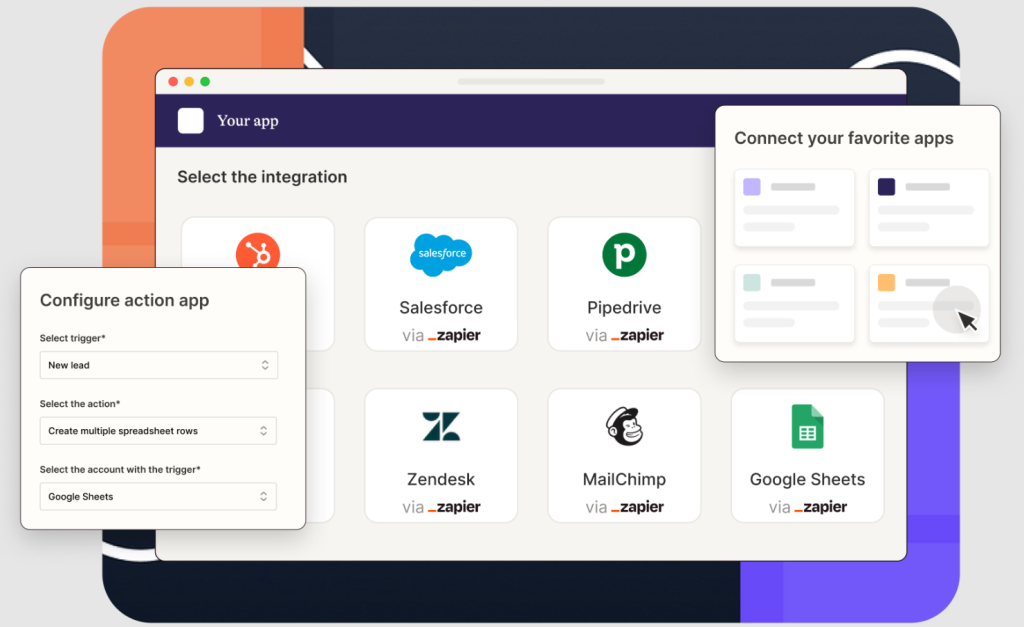
If your systems talk but do not understand each other, you are not integrated you are duct taped.
Test 6: Team Learning Curve – Cross-Industry
Problem: Both a legal firm and a SaaS product company wanted to empower their internal teams to own automation without relying heavily on developers.
Zapier: Non-technical staff easily adopted Zapier by using its pre-built templates and drag-and-drop interface. They were able to automate tasks like follow-up reminders, form-to-email workflows and client status notifications without external help. The learning curve was minimal, and the wins were fast.
N8N: N8N initially required technical onboarding. Team members learned about conditional logic, data nodes, and workflow testing. But once trained, they could build complex internal tools like AI-based document sorting, usage-triggered alerts and custom dashboards. Over time, the team developed internal automation muscle that scaled with the business.
Winner: Depends. Zapier for plug-and-play. N8N for power users.
Do not ask if your team can automate. Ask if your stack allows them to grow.
Automation that Fits Australia
For Australian businesses, several additional factors influence platform choice beyond pure functionality. These include compliance with local data sovereignty laws, such as the Australian Privacy Act and sector-specific regulations, which require that certain data be stored within Australian borders. Integration with the Australian Taxation Office (ATO) for reporting and invoicing, alignment with local business practices, support for Australian payment gateways, and compatibility with national cybersecurity standards also play a critical role.
Data Sovereignty:
N8N’s self-hosting option ensures complete data control, crucial for companies handling sensitive shipment information or operating under strict compliance requirements. Zapier’s cloud-first approach may require additional privacy impact assessments for data.
ATO & Compliance:
Zapier offers dedicated Australian support channels and localised pricing. N8N relies primarily on community support, though the open-source nature enables partnerships with local technology providers.
Local Support:
Zapier offers local billing and broader help content with pre-built integrations. N8N support often relies on the community or partners, hence requiring custom development.
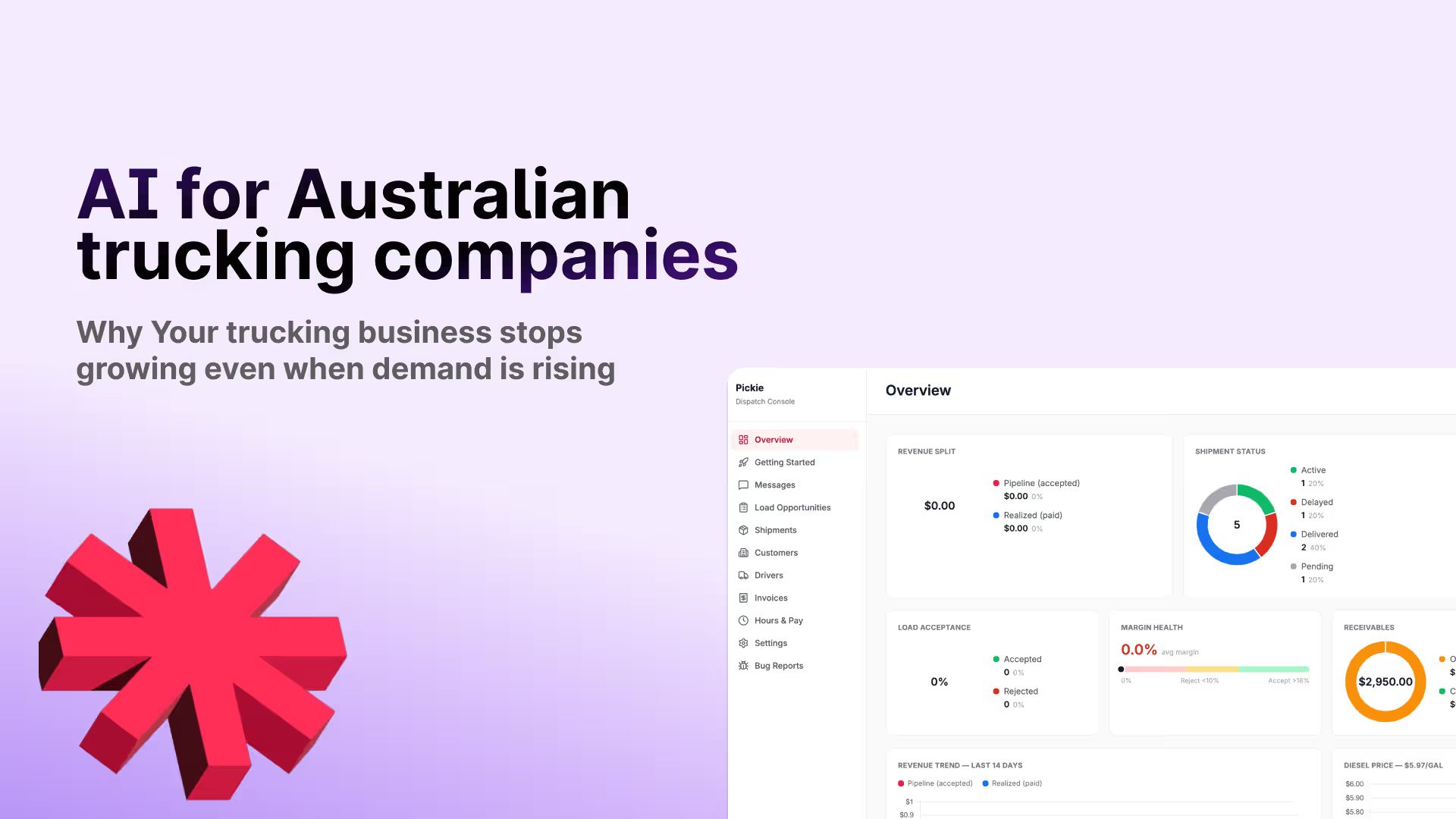 Read alsoLogistics Automation in Australia: Why Your Trucking Business Stops Growing Even When Demand Is Rising
In Australia, platform choice goes beyond features; it is about compliance, control and local fit. Zapier offers ease of integration with local apps, dedicated support and ATO-friendly tools, making it a strong plug-and-play option. Meanwhile, N8N shines with self-hosting and full data sovereignty, ideal for businesses with strict compliance needs. The right choice depends on whether speed or control matters more for your business.
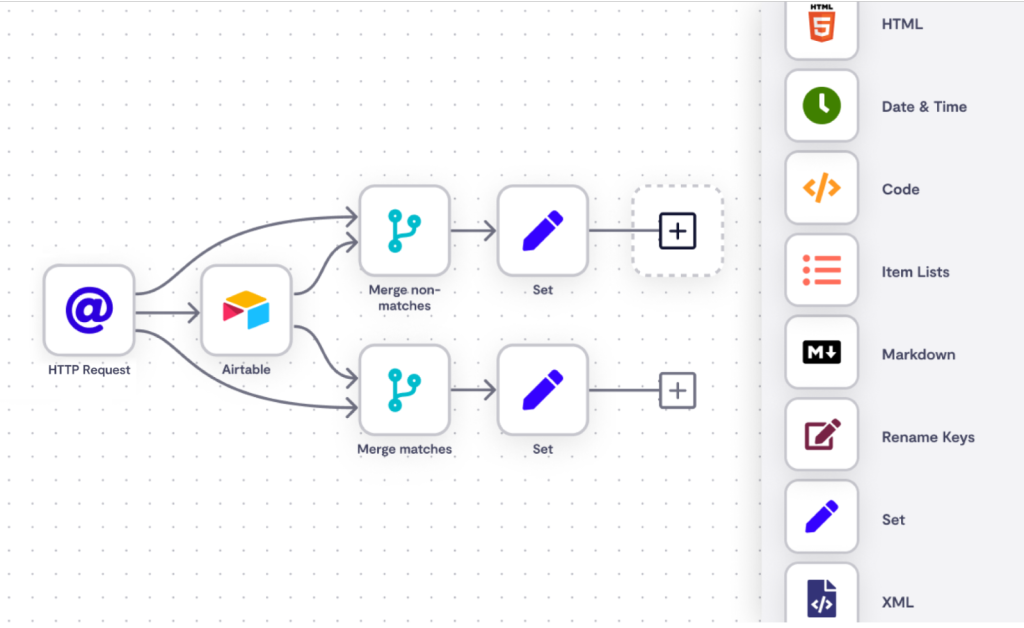
Right Tool for the Right Task
Go with Zapier if you:
- Need fast deployment and low technical lift.
- Want automation for simple, repeatable tasks.
- Have minimal resources for setup or experimentation.
- Value extensive pre-built integrations and community support.
Go with N8N if you:
- Need deep, intelligent workflows.
- Are integrating complex systems requiring custom logic.
- Want full data control and local hosting.
- Need cost-effective scaling for high-volume operations.
The third option is to do both. Some of the best setups use Zapier for quick wins and N8N for strategic automation. This hybrid strategy maximises immediate operational impact while building long-term automation capabilities. Build fast, validate and scale smart.
“The best automation is not about tools. It is about unlocking time, trust and traction.”
Time to Work Smarter, Australia
Whatever industry you are in, one thing is certain: manual work is your growth bottleneck. Instead of hiring another admin or stitching together duct-taped processes, test AI-powered automation that pays for itself. As AI capabilities continue advancing, the gap between no-code simplicity and custom complexity is narrowing. Zapier is investing heavily in AI-powered workflow generation, while N8N’s community continues developing sophisticated pre-built AI nodes. Both of these systems are only going to get better over time.
In the race for automation ROI, speed and depth both matter. Zapier gives Australian SMBs the power to move quickly, automate instantly and save time from day one. N8N, on the other hand, unlocks deeper intelligence, flexibility and long-term control; especially for teams willing to invest in smarter systems. The best choice for you? The one that fits your growth stage, your team’s capabilities and the complexity of the problems you are solving. After all, automation is not about choosing a tool; it is about choosing momentum.
Do you want to keep starting each day fighting operational fires, or would you prefer to spend your time building competitive advantages? Your competitors are already building smart systems. The important question is, will you wait and catch up or build and lead?
Reach out to us at FUZN, we offer a Free one-hour strategic consultation to discuss your automation queries and help you propel towards an ease of mind and efficient work processes.
Frequently Asked Questions
Is Zapier secure enough for Australian health data?
Zapier is HIPAA-eligible but stores data offshore; many clinics add encryption or move PHI to self-hosted N8N.
Does N8N work with Xero and MYOB?
Yes, via native nodes or REST. Hosting in AU data centres ensures latency, compliance and support.
Can I combine Zapier and N8N in one automation stack?
Yes—many firms trigger quick, no-code Zaps and hand the data to N8N via webhooks for heavy AI logic or on-shore processing. Hybrid keeps velocity while you build long-term control.
Which platform handles AI tasks better out of the box?
Zapier offers plug-and-play OpenAI/Anthropic actions; N8N’s open nodes accept any REST or SDK model, giving power users deeper prompt chaining and fine-tuning.
How hard is it to migrate workflows from Zapier to N8N if we outgrow task caps?
Most Zaps map 1-to-1 to N8N nodes. You can export Zapier JSON, import community templates, and complete typical migrations over a single weekend sprint.
What monitoring and error-handling features do they include?
Zapier provides task-level logs and email alerts; N8N adds run history, retry logic, and native Prometheus/Grafana hooks for enterprise-grade observability.
Do either platform meet ISO 27001 or SOC 2 requirements?
Zapier is SOC 2 Type II and ISO 27001 certified. N8N inherits the certifications of your self-hosted infrastructure, letting you control scope and audit readiness.