





Your Marketing is Failing because You are Ignoring Human Psychology
We live in an era where brands are shouting louder than ever with more ads, more content and more promotions, but still most marketing campaigns are falling flat. Why? These campaigns are not built for how people actually think. Traditional marketing often treats consumers like rational robots, assuming if you list enough features, highlight a few benefits and add a CTA, leads will convert. However, real humans do not make decisions that way. Our brains are irrational in the digital era due to too much digital exposure, emotionally and deeply influenced by subconscious cues. This is the reason why even very beautifully designed campaigns can flop, and this is because they miss the mental triggers that drive real action.
Enter Neuromarketing. Smart companies are turning to brain science to understand how people feel about their message, not just what they think. They are tapping into psychological shortcuts hardwired into the human brain and using those insights to craft irresistible marketing. You might not know it, but your favourite brands already use neuromarketing, the science of how our brains react to marketing stimuli in nearly every campaign they run. These strategies tap into subconscious decision-making patterns and often, companies implement them without even realising it. The ones who do it intentionally, however, see significantly better results.
In today’s oversaturated digital landscape, attention is currency and neuromarketing is how smart companies cash in. Ever wondered, why you have the best content and targeted ads, but they amount to no tangible leads and conversion? Your campaigns ignored the basic human psychology of what drives people to engage and turned their attention into the conversion you desired from that campaign.
If your current marketing feels like a shot in the dark, it is time to turn on the lights. Below, we will break down 9 neuromarketing concepts that are changing the game for brands who actually want results.
1. The Framing Effect
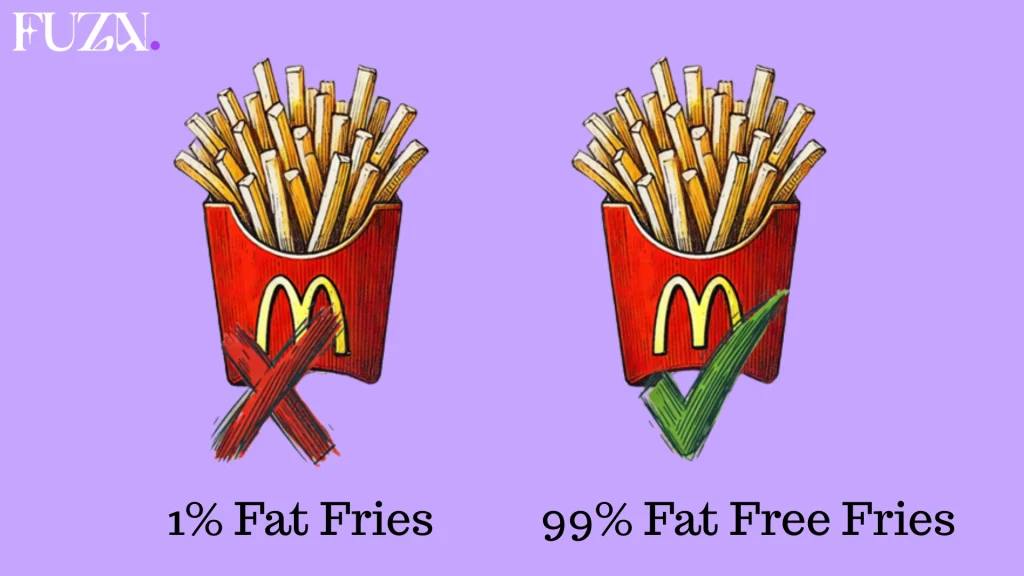
Humans do not make decisions based on only facts; we respond to how those facts are presented. The framing effect shows how the way something is presented changes how it is perceived. Two identical facts can trigger completely different reactions depending on how they are worded. Our brains instinctively favour choices framed in a positive light,t even if the actual content is the same. This is the reason why saying ‘99% fat-free’ sounds healthier than ‘Only 1% fat’. It is the exact same product, but the brain perceives one as a benefit and the other as a drawback. The framing effect is impactful when you are presenting a benefit that could be framed more positively or powerfully
 Top article todayExcel-to-App Evolution: Why the Transformation Matters for SME’s
- Real World Use: When Tropicana rebranded its orange juice as “100% Pure & Natural” instead of “Freshly Squeezed” it saw a drastic increase in sales. Why? It is because “100% Pure & Natural” evokes trust, health and simplicity; the subconscious drivers of purchase behaviour.
- Neuromarketing Trigger: Our brain seeks shortcuts instinctually. Positive framing reduces cognitive efforts and builds trust. When something sounds good, we normally do not question it as much; we just go with it.
Tropicana saw a 14% life in conversions just by changing language. Think of it like asking your kid to eat “energy bites” instead of “vegetable protein balls”. Same thing but better outcome.

2. The Affordability Illusion
Humans are terrible at judging absolute value; we respond primarily to how something is presented. The affordability illusion breaks down big numbers into tiny, daily decisions that feel painless. Think of ‘Membership is $350 per year’ vs ‘Membership is less than a $1 per day’, which one seems more affordable? This way, your product/service offer does not become a budget decision. Affordability Illusion is impactful when you are selling subscriptions, memberships or high-ticket items.
- Real World Use: Audible frames its pricing as “Just $14.95/month” which it pairs it with the emotional reward of “1 audiobook a month”. In this regard, our brain sees the immediate value, not the future cost.
- Neuromarketing Trigger: The affordability illusion works because our brain discounts future expenses and overvalues immediate gratification. By minimising the perceived costs, brands lower purchase resistance and increase signup rates.
Monthly framing helped Audible reduce churn and boost acquisitions. It is like telling a kid, “Just clean one shelf” instead of “Clean your whole room”. The brain buys in faster when the task/cost feels smaller.
3. The Rule of 3
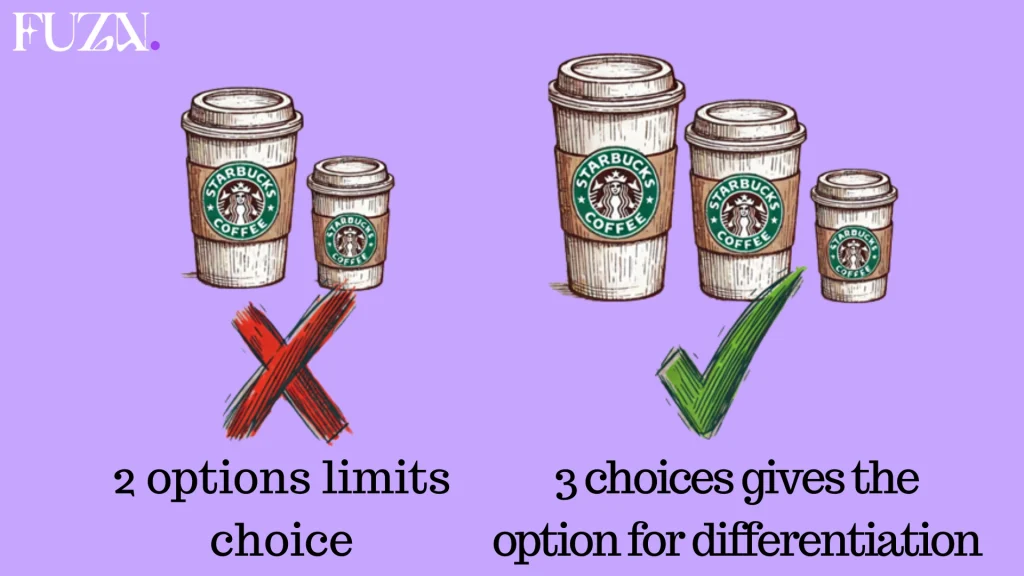
The Rule of 3 leverages our tendency to avoid extremes. When a consumer is given three choices, most of them gravitate towards the middle one. It feels ‘just right’ and safe for their brain. This is also known as the Goldilocks principle. When offered three options: Basic | Standard | Premium, most consumers choose the Standard option. This is because people fear extremes. The Rule of 3 is impactful when you are structuring pricing tiers or product packages.
- Real World Use: Apple uses this in its iCloud storage plans. They do not push the cheapest or priciest options, instead, they guide users to the middle. Why? Because the middle is where the value feels balanced.
- Neuromarketing Trigger: The Rule of 3 plays into our cognitive ease. When overwhelmed by choice, our brain gravitates to the option that avoids the risk without feeling cheap. The middle option gives psychological safety; not too much, not too little. Just right.
The ‘Goldilocks’ effect drives up to a 22-30% increase in mid-tier purchases, especially in SaaS and digital subscription segments. It is like offering three cake slices of varying sizes; most will not pick the smallest, and the biggest feels too much. The middle one? Sold.

4. The IKEA Effect
We value what we help build. When people participate in creating something, even a small part, they become emotionally invested in that product. This is the IKEA Effect. When you a looking for a new sneakers purchase, the ‘Design your own sneakers’ offering feels more emotionally relevant than ‘Buy this Sneaker’. Companies or brands need to use it when they can offer customisation or user participation.
- Real World Use: Nike’s ‘Nike By You’ invites users to customise their own shoes. This offering type is not just about the shoes, it is about identity, pride and ownership. By letting the consumers design their shoes, Nike makes their consumers not only feel like they are buying a product but building their own identity.
- Neuromarketing Trigger: The brain equates effort with value. Ownership increases perceived value. When we invest effort into something, even a bare minimum, our emotional attachment to it skyrockets. The product is, moreover, the same, but our perceived worth of it increases.
Nike’s custom sneaker line sees 30% higher loyalty and repeat purchases. People are not just buying the sneakers, they are bonding with them. Like building IKEA furniture, it can be frustrating, but when you are done assembling, you feel like you have created a masterpiece.
 Read alsoMarketing Powered by AI: The Best AI Models for Every Role in 2025

5. The Power of Free
Nothing triggers action like the word ‘Free’. We are irrationally attracted to anything labelled free. The Power of Free taps into our brain’s love for low risk and instant reward, even if the paid ones give more value. When you sell the same product with two different labels, ‘Free gift included’ and ‘Get $5 off’, the free-gift option often beats the discount option even when the gift is worth less in value. This concept is very effective if you want to lower first-time buyer resistance or increase conversions.
- Real World Use: Amazon mastered this with ‘Free Shipping’. Even if their product price quietly absorbs the shipping cost, our brain fixates on the magic word: free. This makes the consumer’s brain feel like they are winning in value.
- Neuromarketing Trigger: The word ‘Free’ bypasses logical processing and directly hits the amygdala, our emotional response center within the brain. The brain treats it as an emotional reward not just a price point. Zero cost usually feels like zero risk.
Amazon saw over 15% higher cart values after introducing free shipping for Prime members and created an extra revenue model with Prime subscriptions. Kids do this too they will trade you two free stickers for your chocolate bar. It works.
6. The Contrast Effect
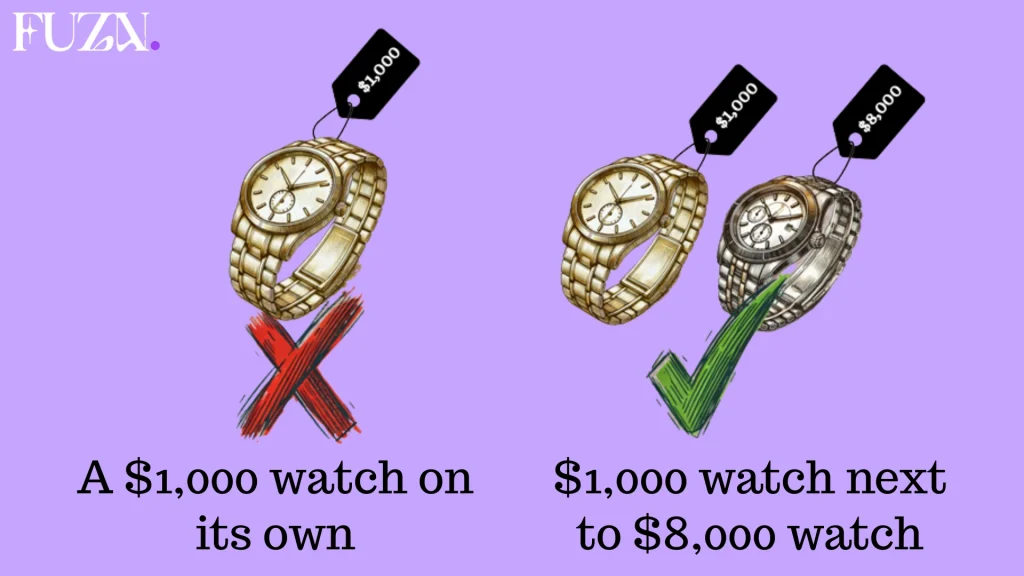
Our brain is hardwired to compare things to what came before; the benchmarks, usually. If you show something expensive next to what you really want to sell, the latter will feel like a bargain. The Contrast Effect makes products appear more valuable simply by comparison. A $1000 jewellery purchase feels reasonable when exposed to a $5500 purchase first. If you want to increase the perceived value of a product or upsell, the contrast effect is a very handy strategy.
- Real World Use: Rolex stores often lead you through their $40000+ lineup before showing you the $8000 model. Guess which one starts looking ‘reasonable’? The $8000 model Rolex watch feels like a value buys in comparison to the majority of consumers.
- Neuromarketing Trigger: Our brain does not judge value in a vacuum; it judges based on contrast. This is also the reason why outlet stores place ‘original price’ tags on everything. Our brain anchors expectations to whatever it sees first.
Luxury brands report up to 18% more mid-tier sales with this tactic. It is like showing your parents your messy room when they visit your house before the less messy one. The less messy room will look spotless to them. Perception is everything.

7. The Paradox of Choice
More options do not mean better decisions. In fact, too many choices create anxiety, decision paralysis and lower satisfaction for the consumers. This mental overload is called the Paradox of Choice. Curate Three tailored Options for the consumers instead of overwhelming them with 20 differing Options. This concept is very impactful if you are an eCommerce brand or service provider offering too any products or service plans.
- Real World Use: Netflix curates ‘Top Picks for You’ instead of dumping its entire catalog for its viewers. This makes the viewers make decisions faster as opposed to endless scrolling and searching. The viewers also choose content faster and stay longer.
- Neuromarketing Trigger: The brain craves simplicity. Too many decisions overload our cognitive bandwidth, leading to no action at all. When options are limited and tailored, we feel more in control and are more likely to act.
Simplifying choices boost conversions by 10-20%. In effective marketing, the lesser stress you create for the consumers on decision making, the more sales you can lock in. Imagine telling someone, ‘Pick from these 3 t-shirts’ vs a catalogue of 100, where do you think decision making happens faster?
Get the best ones in your inbox — no spam, unsubscribe any time.

8. Anchoring Bias
First impressions stick; especially with price. Our brain fixates on the first number it sees even if it is irrelevant. Anchoring bias is thus the situation where the first number we see becomes our mental reference point for value. Instead of ‘On sale for just $99’ use ‘Originally $200, now only $99 (Save 50%)’. The first price you show will always influence perceived value. Anchoring bias is effective when highlighting a genuine discount or on Premium offerings.
- Real World Use: Shopify and other SaaS platforms lead with original pricing and then highlight the discount, if purchased within a certain time. The brain sees savings before the features, hence compelling one to act on the purchase. The $200 becomes your mental benchmark, making $99 feel like a steal.
- Neuromarketing Trigger: Anchors shape our expectations and emotional reactions to pricing. Our brain evolved to fixate on the anchor. It does not ask, ‘Is $99 fair?’ It asks, ‘How much less is it than $200?’
Smart anchoring increases conversions by up to 28% in e-commerce. The trick? Set the first price high and follow it with the real deal. It is like telling someone, ‘This usually costs 4 but I will take 2 for you’. Deal done.

9. The Endowment Effect
The moment we feel like we own something, we value it more. This is the Endowment Effect, and it is a goldmine for trials and freemium models. Once people feel like they own something, it is harder to give it up. Therefore, a lot of companies and brands offer ‘Start your free trial’ which gives ownership before commitment. The brain assigns more value to what feels like ‘mine’. This concept is very impactful when a company or brand wants to drive trial or early user engagement.
- Real World Use: Spotify’s 30-day free trial gets people using the product, building playlists and feeling invested before they ever pay. By the time the payment is required, the product already feels like a habit which drastically increases the subscription purchase.
- Neuromarketing Trigger: Ownership even fake or temporary activates emotional connection and loss aversion. We do not want to give it up. The brain hates losing what it already has more than it loves gaining something new.
Freemium and trial-based models often lead to 2-5x conversion rates. It is like letting someone test drive a car for a week; giving it back feels like a downgrade. Give first, ask later.
Is Neuromarketing right for your business?
Think about it:
 Read alsoHybrid Work and AI: Why Most Companies are Getting it Wrong
- Do your customers bounce before converting?
- Are your ads being seen but not acted on?
- Do people visit your site but leave without paying?
If your answers are ‘Yes’ to these questions, your marketing issues are not a value problem; it is a message problem, and it is a brain problem. Neuromarketing is not just for billion-dollar brands. The fundamentals and concepts of it are relevant for any business that sells to humans. SaaS, eCommerce, B2B, solopreneurs; everyone can benefit from messaging that speaks to how people decide.
At FUZN, we take these neuroscience-backed strategies and turn them into practical, measurable campaigns that drive results. We are not here to overcomplicate your marketing campaigns. We are here to decode the brain and use that knowledge to make your marketing campaigns successful and help your business grow. We can help you:
- Identify gaps where your marketing ignores how people think.
- Apply the Neuromarketing principle to your copywriting, UX, pricing and GTM (go-to-market) strategies.
- Run A/B tests rooted in ‘how the brain works’ not just guesswork.
You do not need multi-million-dollar budgets, fancy neuroscience labs and lab coat personnel within your team to incorporate the Neuromarketing concept. You just need FUZN.
If you want to move from attention to enterprise trust, consider building a well-designed portfolio that highlights business value, not just visuals. A clear portfolio shows how your work aligns with enterprise needs, demonstrates consistency and makes it easier for large clients to see you as a strategic partner.
Good Marketing Sells. Great Marketing Connects. Do Both.
In a world drowning in content, the brands and companies that win are the ones who understand people, not just products and platforms. The truth is that our brain still makes decisions the same way it did 10,000 years ago. We buy based on emotion, choose shortcuts by habit and justify them with logic later.
Neuromarketing is not manipulation, it is right communication. It is meeting your target audience, where they are, learning how they think and discovering why they would choose you. It makes your message emotionally relevant, and hence it will stick with your audience. Neuromarketing makes your products and services irresistible, and it makes your marketing dollars go further in terms of ROI.
Take the guesswork out of your marketing campaigns. Do not shout louder. Get smarter.
At FUZN, we do not just guess what works; we build your campaigns that work with your audience’s brain, not against it. If you are ready to make every marketing dollar count, we will show you how science turns strategy into success. Reach out to us.