





In a landscape where conformity feels safe, a viral video of a penguin offers a surprising lesson for Australian leaders looking to rethink their business process automation strategy and break away from the herd.
If you have spent any time on social media recently, you have likely seen the penguin. Not the one standing still. Not the one looking confused. This one is different.
It breaks away from the group and walks alone toward the mountain. While the rest of the penguins move together in a familiar direction, this one chooses a harder, quieter path. No applause. No certainty. Just intent. The video went viral because it struck a nerve. For modern Australian businesses, it should be.

We live in an era where conformity feels safer than innovation. Where the well-trodden path seems more reliable than the uncharted one. Where waiting to see, what others do before committing to a direction has become standard operating procedure. The uncomfortable truth is that the businesses winning today are not the ones playing it safely. They are the ones willing to ask difficult questions about how work actually gets done.
Because today, the organisations that succeed are not always the ones following the crowd. They are the ones willing to rethink how work gets done, even when that path looks uncomfortable at first. The mountain penguin is not reckless. It is not lost. It is intentional.
In many ways, this mirrors the reality facing Australian SMEs and mid-market organisations today. Most businesses are not ignoring technology. They have invested in CRM platforms, marketing tools, automation software, analytics dashboards and reporting systems. On paper, they are ‘digitally enabled.’
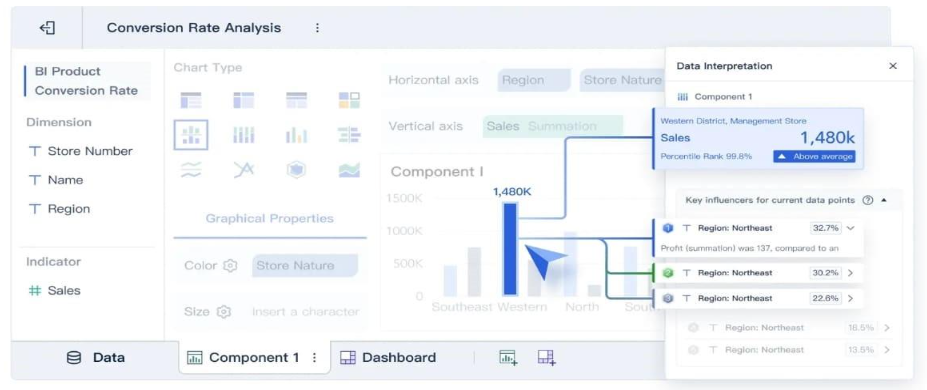
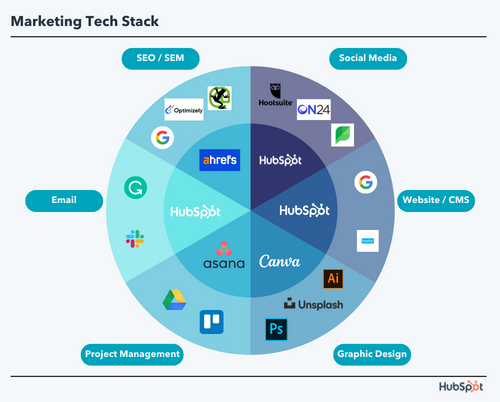
Walk into most Australian businesses today and you will find no shortage of software subscriptions. Zoho or Salesforce or HubSpot for customer management. Mailchimp or ActiveCampaign for email marketing. Slack for team communication. Asana or Monday for project management. Xero or MYOB for accounting. The average mid-sized business now uses dozens of software applications. The technology is there. The investment has been made. The digital transformation boxes have been checked.
The right Business Process Automation Strategy can propel businesses forward, encouraging them to innovate and break away from the norm.
Yet despite this, progress often feels slower than expected. Growth stagnates. Teams are stretched. Manual work persists. Leaders sense there is untapped potential in their systems, but unlocking it feels complex. As MIT Sloan observes, ‘Technology alone does not create competitive advantage; how it is integrated into processes and decision-making does.‘ The difference between the penguins is not access to tools. It is the willingness to design a different path forward.
The Illusion of a Business Process Automation Strategy Without Design
One of the most persistent myths is that a successful business process automation strategy is something you purchase off the shelf. In reality, automation is something you build deliberately. Think about your current technology stack. How many tools does your organisation pay for today? And how many of them are genuinely working together to move the business forward?
 Top article todayExcel-to-App Evolution: Why the Transformation Matters for SME’s
Most businesses follow the same path as the herd. A CRM is implemented. Marketing automation is switched on. Reports are generated. Workflows technically exist. The mountain penguin, however, asks a different question: ‘Is this actually making us faster, clearer and more effective?’
The illusion is convincing. Dashboards are full. Data is abundant. Activity looks high. Beneath the surface however, friction remains. Sales teams still chase follow-ups manually. Leads stalls between departments. Data lives in disconnected systems. Decisions are delayed because information, while available, is not trusted or timely.
Consider a typical scenario; a potential customer fills out a form on your website. The lead enters your CRM. A notification is sent. But then what? Does it automatically route to the right salesperson based on territory, product interest or deal size? Does the marketing team know to pause their nurture sequence? Does the finance system flag this as a qualified opportunity for forecasting? Or does someone need to manually update three different systems, send two emails and remember to follow up in 48 hours?

Also Read: Listen: AI is only a Tool, not your Strategy
This is where the gap between buying tools and executing a deliberate business process automation strategy becomes painfully clear. The tools exist. The capability is there. But the connective tissue, the intelligent workflows that turn isolated tools into a coherent system, is missing. The result is what one frustrated sales leader described as ‘running a marathon in handcuffs.’
‘We have all the data we need. We just cannot act on it fast enough.’
This comment from a CEO during a recent engagement captures the frustration perfectly. McKinsey reports that nearly 70% of digital transformation initiatives fail to achieve their stated goals, largely due to poor integration and lack of process alignment. This is the moment where most organisations pause and follow the group. The mountain penguin does not.
Over time, businesses accumulate tools organically. Each one solves a local problem. Collectively, however, they create fragmentation. Without a unifying business process automation strategy, teams end up managing software instead of improving outcomes. The question shifts from ‘Do we have the right tools?’ to ‘Why do our tools not talk to each other?’ Duplicate data entry, conflicting reports and manual workarounds become the norm. Following the herd feels easier than rethinking the system.
This fragmentation compounds over time. Marketing runs on one platform. Sales on another. Customer service on a third one. Finance has its own system. Each department optimises locally but the business suffers globally. A customer might receive three different messages from three different teams because no single system knows what the others are doing. Revenue gets lost not because of bad products or poor service but because the internal operational architecture cannot keep up with the speed of modern commerce.
Another common mistake is automating workflows that were never clearly designed. If a lead handover is unclear, automation accelerates confusion. If approvals are inconsistent, automation amplifies inconsistency. As Harvard Business Review puts it, ‘Automating a bad process does not fix it; it scales the problem.’
This is perhaps the most expensive mistake organisations make. They see automation as a way to ‘fix’ broken processes, when in reality, automation simply makes those processes run faster; including all their flaws. If your approval process involves seven unnecessary steps, automating it means those seven unnecessary steps now happen at the speed of software instead of the speed of email. You have not improved; you have just industrialised inefficiency.
Also Read: Your Competitors are Letting AI Run Operations and You should Too
The mountain penguin pauses here, not to stop but to ask, ‘What should this process look like if it worked perfectly?‘ Only then does automation make sense. There is also a very human barrier. Many teams hesitate because ‘This is how we have always done it,’ or ‘What if the system breaks?’ or ‘We will improve it later.’ However, in fast moving markets, later is expensive. Standing with the group feels safe until competitors move faster, respond better and turn operational speed into a competitive edge.
This resistance is understandable. Change involves risk. Systems that ‘kind of work’ feel safer than systems that might fail spectacularly during a transition. There is comfort in the familiar, even when the familiar is inefficient. This comfort, however, comes at a cost that many organisations only recognise in hindsight: the cost of opportunities missed, customers lost to faster competitors and talented employees frustrated by outdated tools.
 Read alsoIntroducing Pickie: Dispatch over WhatsApp for Small Fleets
The irony is that staying still is the riskier choice. Markets do not pause for businesses to catch up. Customer expectations do not lower themselves to match your operational capabilities. The question is not whether to evolve but whether to do it proactively or be forced into it reactively when the gap between your capabilities and market demands becomes unsustainable.
What High-Performing Australian SMEs Do Differently
High performing organisations do not treat their business process automation strategy as a simple IT project. They treat it as a comprehensive business design. They design workflows before choosing tools. Instead of asking what software can do, they ask, What outcomes matter most? Where does work slow down? Where should employees focus their expertise on? Where are we losing trust, time or revenue due to friction?
This shift in perspective changes everything. Instead of starting with ‘What CRM should we buy?’ they start with ‘How should a customer journey actually flow from first contact to closed deal to ongoing relationship?’
Instead of ‘What marketing automation platform has the most features?’ they ask ‘At what points in our customer lifecycle do we need to deliver the right message at the right time, and what would that look like if it worked perfectly?’
The difference is profound. In the first approach, you end up with powerful software that does many things you do not need and cannot do the specific things you do need without extensive customisation. In the second approach, you build systems around your actual business logic, using tools as pathway to an end rather than as ends in themselves.
‘We stopped asking what the software could do and started asking what we needed it to do for us. That shift changed everything.‘
This insight from a sales director perfectly captures the moment the penguin commits to the mountain. The most effective automation does not replace people. It protects them. It removes repetitive admin, manual reporting and unnecessary approvals; and gives time back to judgement, service and creativity.
Think about what actually creates value in your business. Is it updating spreadsheets? Copying data between systems? Chasing approval signatures? Generating the same report every Monday morning? Or is it the conversation where a salesperson truly understands a customer’s challenge? The creative insight that shapes a new product feature? The strategic decision about which market to enter next? The empathetic customer service interaction that turns a complaint into loyalty?
Also Read: Model Context Protocol (MCP): The Bridge Between AI and Your Data
Get the best ones in your inbox — no spam, unsubscribe any time.
Automation should free humans to focus on the work that requires human judgment, creativity and emotional intelligence. Deloitte’s research shows that organisations combining automation with human-centric design see measurable gains in productivity and employee satisfaction. When people spend less time on soul-crushing administrative tasks and more time on work that matters, both business outcomes and workplace culture improve.
A useful test is simple; tasks that drain energy without adding value should be automated. Tasks that require context, empathy and judgement should be amplified. That balance is where performance and productivity thrive. This is not about replacing expensive salespeople with cheap software. This is about ensuring that talented people spend their time on work that actually requires talent.
Across Australian SMEs and growing organisations, the pattern is consistent. CRMs are often used as databases rather than engines. Automation features exist but remain underutilised. Teams rely on workarounds because workflows were never intentionally designed. An operations manager recently admitted, ‘We know we are not using our CRM properly but we are afraid to change it because something might break.’
This fear is real but it misunderstands the nature of the risk. The system is already broken, just in ways that have become normalised. Lost leads that fall through the cracks. Deals that stall because nobody remembered to follow up. Customers who defect because service requests vanish into email threads. The current state is not stable; it is simply familiar. Familiarity, however, should not be confused with functionality.
In reality, the opportunity is rarely new software. It is connecting what already exists. Simple changes can create a disproportionate impact. Automated lead routing closes response gaps. Real-time reporting replaces weekly manual summaries. Seamless handoffs create one coherent customer journey. When these foundations are in place, decision making accelerates. Service improves. Growth feels controlled, not chaotic. The penguin moves not faster but with purpose.
The 5-Step Strategic Framework.
Before subscribing to another SaaS tool, high-performing Australian organisations typically follow this audit process:
- Process Mapping: Visually map the current customer journey (e.g., from website form to final invoice).
- Friction Identification: Highlight exactly where manual data entry or email handovers occur.
- Data Unification: Identify where data lives (Silos) vs. where it needs to be (Source of Truth).
- Workflow Design: Design the “perfect state” workflow without thinking about specific software limitations.
- Tool Selection: Only now, select the integration tools (like n8n, Zapier, or native APIs) that bridge the gaps.
A useful next step is to map where too much depends on a single person, tool or channel; a short checklist on the Hormuz chokepoint shows familiar Australian examples and helps you spot the weakest links in your own workflows so you can prioritise what to fix first.
Shifting From Fragmentation to Workflow Integration
The difference between following the group and choosing the mountain is coherence. Before automation maturity, businesses are characterised by manual updates, reactive firefighting, fragmented customer experience and data that exists but cannot be trusted quickly. After automation maturity, the picture transforms; connected workflows, predictable outcomes, real-time visibility and teams focused on growth; not repeated admin work.
What does this transformation actually look like in practice? It means a lead comes in from your website and within seconds, not hours; the right salesperson receives a notification with complete context; previous interactions, company size, industry and areas of interest. It means your marketing system knows how to pause generic nurture emails because a real conversation has started. It means finance can see pipeline changes in real time instead of waiting for Friday’s CRM export. It means customer service can see the entire customer history without asking three colleagues and checking four systems.
Modern automation typically combines CRM platforms (such as Zoho or HubSpot), workflow orchestration tools (like n8n), AI-assisted reporting and analysis and conversion focused landing pages that feed clean data into systems. Each element reinforces the others, forming a true operating system for the business. This is not about technology for technology’s sake. This is about creating a foundation that allows employees to do what they do best.
The critical insight is that these tools are commodities. Zoho and HubSpot offer similar features. Most workflow automation platforms do roughly the same things. The competitive advantage does not come from which tools you choose. It comes from how intelligently you connect them to your specific business logic, customer journey and operational reality. This is why two businesses can use the exact same software stack and achieve radically different results.
 Read alsoConstruction Productivity in Australia: Build More Without Burning Out the People Who Build It
Also Read: The $50K Marketing Question: Freelancer, AI or Agency?
Customer expectations are rising. Talent is expensive. Speed matters. PwC research shows that organisations using automation effectively are more resilient, more scalable and better positioned to adapt to change. Automation is no longer just about cost reduction. It is about speed, consistency, experience and trust. These are genuine leadership concerns, not back office details.
If you want a concrete example of that gap in practice, our breakdown of how many Australian SMEs are using barely 20% of its capability shows the common missed automations and integrations that leave teams doing manual handoffs.
Be the Penguin That Chooses the Mountain (Strategic Automation)
The mountain penguin went viral because it represents something rare; the willingness to move differently when staying comfortable is easier. For businesses, the lesson is clear. Tools do not create momentum. Dashboards do not create clarity. Automation does not happen by accident.
What creates advantage is intentional system design; aligning people, processes and technology around outcomes that matter. This requires hard questions:
- Where are we losing time to manual work that could be automated?
- Where are customers experiencing friction because our internal systems do not talk to each other?
- Where are talented people spending their days on tasks that drain rather than energise them?
- Where is the gap between the data we have and the decisions we can make?
These questions do not have easy answers. Designing effective automation requires understanding both your business deeply and the technology landscape broadly. It requires the willingness to challenge processes that have ‘always been done this way.’ It requires patience during transitions and conviction that the destination is worth the journey. But the alternative, maintaining the status quo while markets evolve around you, is not actually safer. It is just a slower failure.
Because the businesses that win in today’s digital economy are not the ones waiting to see what happens next. They are the ones already walking toward the mountain. They are the ones asking not what their software can do but what their business needs to become. They are the ones willing to break from the group, choose the harder path and build something intentional.
The mountain is there. The path exists. The only question is whether you are ready to take it.
At FUZN, we help businesses take that path. Moving from buying tools to building systems. From following the herd to creating sustainable momentum. From treating automation as an IT expense to treating it as a strategic infrastructure that enables everything else.
Why do 70% of digital transformation initiatives fail?
According to McKinsey, they fail largely due to poor integration and lack of process alignment. Businesses often buy tools before designing the workflows, leading to fragmentation rather than efficiency.
What is the difference between having automation and being automated?
Having automation means owning tools like CRMs or email platforms. Being automated means those tools are connected via intelligent workflows that move data seamlessly without manual intervention.
How should Australian SMEs approach automation strategy?
Instead of treating it as an IT project, treat it as a business design. Map your ideal customer journey first, identify friction points, and then build the automation architecture to support that journey.
Is automation only for large enterprises?
No. In fact, Australian SMEs often see faster ROI because they can pivot quicker than large enterprises. Tools like Zapier and n8n make enterprise-grade automation accessible to mid-market businesses.
Will automation replace my employees?
Strategic automation is designed to remove repetitive admin tasks (data entry, scheduling), allowing your team to focus on high-value tasks like sales, strategy, and customer service.
How long does it take to see results from a new automation strategy?
While full transformation takes time, fixing specific broken workflows (like lead routing) can show results in days.