





The Australian Agentic AI market has moved past the experimentation phase. Organisations that spent 2024 and 2025 trialing AI tools, running chatbot pilots and issuing AI governance policies are now facing a harder question; how do we embed AI into the actual mechanics of how our business operates?
This article is designed to answer that question. It maps the current Australian Agentic AI vendor landscape across four distinct layers infrastructure, workflow automation, enterprise platforms and implementation. Furthermore it provides a structured framework for evaluating vendors against real operational requirements.
The core finding is this; the quality of the underlying AI model is no longer the primary differentiator. Execution is. The businesses that will see measurable returns from Agentic AI are those that invest in operational design, integration architecture and governance, not simply in model access.
What is Agentic AI and Why does It Matter Now?
Most businesses have encountered AI in its reactive form; generate a draft, answer a question or to summarise a document. These capabilities are genuinely useful but they position AI as a tool that assists humans with discrete tasks rather than as a participant in business operations.
Agentic AI is categorically different. An Agentic AI system can execute a multi-step workflow, make contextual decisions at each step, trigger actions across multiple software systems and escalate to a human only when genuinely required. It does not wait to be prompted for each step. It operates.
In practical terms, this looks like, “a lead enters through a web form, the AI qualifies it against defined criteria, updates the CRM, triggers an email sequence, notifies the relevant sales representative and generates a customised proposal brief,” all without a human initiating each step. The human reviews and acts on the output, rather than managing the process.
McKinsey & Company has estimated that intelligent automation and generative AI could add trillions in annual productivity value globally as organisations move from isolated AI tools to operational AI systems. The Australian market is tracking this trajectory, with KPMG research indicating rapid acceleration in AI investment focused specifically on workflow optimisation and automation.
The shift matters because it changes the procurement question entirely. Buying access to an AI model is not the same as deploying an Agentic AI system. The gap between those two things, model access and operational deployment, is where most Australian businesses currently sit.
The Australian Agentic AI Vendor Landscape
One of the most common sources of confusion in this market is the assumption that all AI vendors are solving the same problem. They are not. The vendor ecosystem spans four distinct layers, each performing a fundamentally different function. Understanding this structure is prerequisite to any procurement decision.
| Layer | What it Does | Vendors Example |
| AI Infrastructure | Provides foundation models, APIs and hosting environments; the intelligence engine | OpenAI, Anthropic, Google Vertex AI, Azure AI, Amazon Bedrock |
| Workflow Automation & Orchestration | Connects AI to operational processes; manages multi-step, multi-system workflows | n8n, Make, Zapier AI, UiPath, Retool AI |
| Enterprise AI Platforms | Embeds AI agents directly into enterprise operations and existing SaaS ecosystems | Salesforce Agentforce, ServiceNow AI, Microsoft Copilot Studio |
| Implementation Partners | Designs, builds and deploys AI systems inside specific business contexts; handles governance and integration | FUZN, DIT Solutions, Selr AI, Team 400, Apex AI |
Table 1: The four layers of the Australian Agentic AI vendor ecosystem
 Top article todayExcel-to-App Evolution: Why the Transformation Matters for SME’s
Most businesses need components from more than one layer. A company deploying Salesforce Agentforce still needs to decide which AI infrastructure underpins it, how it connects to non-Salesforce systems and whether internal capability exists to design and govern the workflows. A business evaluating n8n for automation still needs an AI model, a hosting strategy and implementation expertise. The layers interact.
Also Read: How to Build a 100% Custom AI with Your Organisational Data
Layer 1: AI Infrastructure Companies
Infrastructure providers supply the foundational intelligence; large language models (LLMs), API’s and hosting environments that power Agentic AI systems. These are the companies most people recognise from media coverage; OpenAI, Anthropic, Google, Microsoft and Amazon.
For Australian businesses, infrastructure selection involves three primary considerations; data residency (where processing occurs), model capability (which tasks the model handles well) and commercial terms (how pricing scales with usage). Most infrastructure providers now offer enterprise agreements with Australian data region options, though the specifics vary significantly.
The critical point is that infrastructure alone does not create operational transformation. A model API provides access to intelligence, it does not provide workflow architecture, governance or integration. Organisations that purchase model access and expect it to self-organise into operational value consistently underestimate the design and integration work required.
To ground these infrastructure decisions in the local market, compare providers’ national presence, implementation capabilities and client outcomes in our Top 7 Australian AI Companies — the guide evaluates leading AI agencies on service depth, technical strength and ability to deliver measurable returns, helping you match infrastructure choices to real delivery partners.
Layer 2: Workflow Automation and Agent Orchestration Platforms
Orchestration platforms are the connective tissue of the Agentic AI stack. They take AI capability and make it operational by defining the sequence of actions, managing data flow between systems, handling conditional logic and triggering outputs across the software stack.
Platforms in this category range from low-code tools accessible to non-technical teams (Make, Zapier AI) to highly flexible open-source frameworks (n8n) and enterprise-grade RPA systems (UiPath). Selection depends heavily on the technical maturity of the implementation team, the complexity of required workflows and the need for self-hosted versus cloud-managed infrastructure.
This layer is where Agentic AI becomes operationally tangible. It is also where vendor lock-in risk is highest, since workflow logic built inside one platform’s proprietary environment is typically difficult to migrate.
Layer 3: Enterprise Agentic AI Platforms
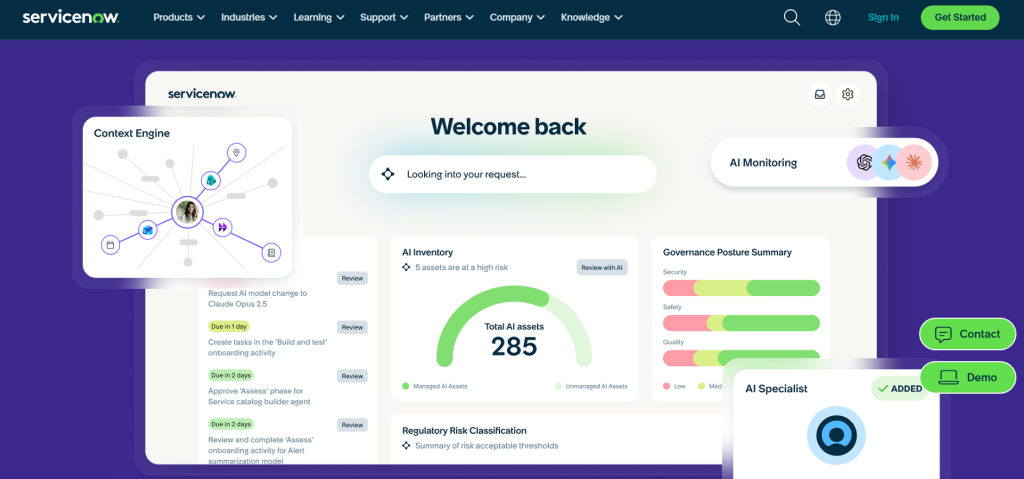
Enterprise AI platforms; Salesforce Agentforce, ServiceNow AI and Microsoft Copilot Studio, embed AI agents directly into existing enterprise systems. For organisations already heavily invested in these ecosystems, this approach reduces integration complexity significantly.
The trade-off is flexibility. Enterprise platforms are optimised for their native environments, which means AI capability is often constrained to workflows those platforms support well. Organisations with complex cross-system requirements or non-standard operational logic may find these platforms limiting. They also typically carry enterprise-tier pricing, making them unsuitable for most SMEs.
Layer 4: Australian AI Implementation Companies
Implementation companies are the most overlooked and arguably most consequential layer in the market. They are not model providers or platform vendors, they are the organisations that take AI infrastructure and platforms and integrate them into specific business contexts.
 Read alsoConstruction Productivity in Australia: Build More Without Burning Out the People Who Build It
The Australian implementation market is maturing quickly, with companies now specialising across different segments; SME-focused deployers (Selr AI), enterprise transformation practices (Team 400, SimplyAI) and operational AI system builders (FUZN, Apex AI).
Most business AI failures are not model failures. They are implementation failures; a mismatch between AI capability and operational context, inadequate integration architecture or insufficient governance design. Implementation quality is often the factor that determines whether an AI investment generates returns or becomes a sunk cost.
Also Read: AI Agent vs AI Chatbot
Neutral Vendor Grid: Features, Security & Pricing
The following grid provides a structured comparison of key agentic AI vendors currently active in the Australian market. Pricing signals are indicative only and should be validated directly with vendors, as enterprise agreements vary significantly. Security and governance assessments reflect publicly available information as of mid-2025.
| Vendor | Category | Key Capability | Best For | Data Governance | Pricing Signal |
| Open AI | Infrastructure | GPT-4o / Assistants API | Model-first builds | US-hosted; SOC 2 | Usage-based; enterprise plans |
| Anthropic (Claude) | Infrastructure | Long context; safety emphasis | Regulated industries | US-hosted; SOC 2 | Usage-based; enterprise plans |
| Google Enterprise Agent Platform | Infrastructure | Gemini models; GCP integration | Google-stack orgs | AU data regions available | GCP pricing; committed use discounts |
| Microsoft Azure AI | Infrastructure | OpenAI on Azure; Copilot stack | Microsoft 365 environments | AU data residency available | Enterprise agreements; pay-as-you-go |
| Amazon Bedrock | Infrastructure | Multi-model access; AWS native | AWS-stack orgs | AU regions; IRAP aligned | Consumption-based; reserved capacity |
| n8n | Workflow Automation | Open-source orchestration | Technical teams; custom flows | Self-hosted option available | Free (self-hosted); cloud plans from ~USD $20/mo |
| Make | Workflow Automation | Visual workflow builder | SMEs; non-technical teams | EU/US hosted; SOC 2 | Free tier; paid from USD $9/mo |
| Zapier AI | Workflow Automation | AI steps in Zap workflows | SaaS-heavy stacks | US-hosted; SOC 2 | Free tier; paid from USD $19.99/mo |
| UiPath | Workflow Automation | RPA + AI agents | Enterprise; legacy system automation | On-prem/cloud options | Enterprise pricing; contact sales |
| Salesforce Agentforce |
Enterprise Platform | CRM-native AI agents | Salesforce-first orgs | Salesforce Shield; AU data centres | Platform add-on; enterprise contract |
| ServiceNow AI | Enterprise Platform | IT ops; workflow intelligence | Large IT departments | AU-compliant options | Enterprise licensing; contact sales |
| Microsoft Copilot Studio | Enterprise Platform | Low-code agent builder | Microsoft 365 orgs | AU data residency available | M365 bundle or standalone USD $200/month/tenant |
| FUZN | Implementation Partner | Workflow architecture; AI operationalisation | SME to mid-market; AU-based | AU-based delivery; client data protocols | Project-based; retainer options |
| Selr AI | Implementation Partner | SME AI systems; training | Small business; first AI deployment | AU-based | Project-based; workshops |
| Team 400 | Implementation Partner | Enterprise AI transformation | Large enterprise; complex transformation | AU-based | Enterprise consulting fees |
| Apex AI | Implementation Partner | Custom agents; workflow optimisation | Mid-market; custom builds | AU-based | Project-based |
Table 2: Agentic AI vendor comparision grid; Australian market. Security posture based on publicly available certifications.
Note on Pricing: Infrastructure and enterprise platform pricing at scale is almost always subject to negotiation. Published pricing typically reflects entry-level or developer tiers. When modelling total cost of ownership, account for API consumption costs, platform licensing and implementation fees as separate line items; they are rarely bundled.
How to Evaluate Agentic AI Vendors: A Procurement Framework
Vendor evaluation for Agentic AI should not begin with product demos. It should begin with operational clarity; a precise understanding of which workflows the organisation wants to automate, what decision logic those workflows require and what the measurable success condition looks like.
Organisations that skip this step consistently select vendors that are impressive in demonstration but poorly matched to operational reality. The following framework is designed to structure procurement conversations so that vendor capability is assessed against specific organisational requirements.
1. Data Sovereignty and Governance
For Australian businesses, particularly in healthcare, legal, financial service, and government; data residency is not a secondary consideration. It is a compliance requirement. The relevant questions are not limited to where data is stored, but extend to where it is processed, who has access during processing, and what the vendor’s data retention and deletion policies are.
Get the best ones in your inbox — no spam, unsubscribe any time.
Vendors with Australian data centre options (Azure, AWS, Google Cloud) provide stronger residency controls but these must be explicitly configured, they are not typically the default. Self-hosted deployment (available through platforms like n8n in-accordance with implementation partners like FUZN & Selr AI) provides the strongest data sovereignty profile but introduces operational responsibility for infrastructure management.
2. Workflow Flexibility vs. Template Rigidity
Many AI platforms are optimised for the use cases their vendors market most frequently. These demos are polished but the underlying workflow architecture may be rigid, capable of handling the demonstrat case but not the organisation’s specific operational logic.
During evaluation, present vendors with your actual workflows rather than asking them to demonstrate their own. The question is not whether the platform can execute a lead qualification workflow in principle, it is whether it can execute your lead qualification workflow, with your CRM, your exception handling and your approval requirements.
3. Integration Depth and Ecosystem Fit
Agentic AI systems that cannot connect to existing operational software create new silos rather than resolving existing ones. Integration capability must be assessed specifically against the organisation’s current stack, not against a generic list of supported applications.
The relevant distinction is between native integrations (maintained by the platform vendor, typically stable and well-supported) and custom integrations (built via API, requiring ongoing maintenance). Custom integrations are often necessary but carry long-term support obligations that should be factored into total cost of ownership.
4. Human Oversight Architecture
Agentic AI systems make decisions autonomously. This is their value proposition. It is also the source of the most significant governance risks. Any Agentic AI system deployed inside business operations should have clearly defined escalation paths, human approval checkpoints for high-stakes decisions and audit trails that make AI-triggered actions visible and reviewable.
Vendors that downplay the importance of human oversight architecture during sales conversations should be treated with caution. The question is not whether a system can operate autonomously, it is whether it can do so within defined governance boundaries.
5. Vendor Lock-In Risk
This is the most underestimated procurement risk in the Agentic AI category. Workflow logic, integration configurations and agent design built inside a proprietary vendor environment are often non-portable. If the vendor changes pricing, discontinues a feature or is acquired, the organisation may face significant cost and disruption to migrate.
Mitigation strategies include prioritising open-standard integrations over proprietary connectors, retaining ownership of workflow documentation and logic design and building internal capability alongside vendor deployment rather than creating full dependency on a single provider.
Also Read: RPA vs AI Automation: The Complete Guide
 Read alsoLogistics Automation: What Could Your Business Do With 20 Extra Hours Every Week?
Agentic AI Vendor Procurement Checklist
The following checklist is designed to structure vendor assessment conversations. It can be used as a request-for-information (RFI) framework or as an internal scoring tool during vendor evaluation.
| Evaluation Area | Questions to Ask Any Vendor |
| Data Sovereignty | Where is data processed and stored? Is Australian or on-prem hosting available? Does the vendor comply with the Australian Privacy Act? |
| Workflow Flexibility | Can workflows be customised to our operational logic or are we locked into templates? Who owns and controls the workflow design? |
| Integration Depth | Can the system connect with our existing CRM, ERP, project management, and finance tools; bidirectionally? |
| Human Oversight | Are approval checkpoints built in? Is there an escalation path for exceptions? Can humans intervene at any workflow stage? |
| Vendor Lock-In Risk | Can our workflow logic migrate to another platform? Are integrations built on open standards or proprietary connectors? |
| Security & Compliance | Is there role-based access control? How is sensitive data classified and protected? Does the vendor carry SOC 2, ISO 27001 or equivalent? |
| Scalability Path | What does the pricing model look like at 2x or 5x usage? Is the architecture designed for growth or optimised for demos? |
| Implementation Support | Is implementation included or a separate engagement? Who supports the system post-go-live? |
| Operational Transparency | Can stakeholders see what the AI is doing and why? Is there an audit trail for AI-triggered decisions? |
| Reference & Track Record | Can the vendor provide case studies in our industry or operational complexity? Who else in Australia is running this in production? |
Table 3: Agentic AI vendor procurement checklist. Recommended for use in RFI/RFP processes and internal scoring
The Most Common Implementation Mistakes
The Australian market is generating enough Agentic AI deployment experience now that patterns are emerging. The following failure modes appear consistently across organisations that have invested in AI systems but not yet achieved operational returns.
Buying AI Before Understanding Workflows
Organisations that begin procurement by evaluating AI tools, rather than by mapping their operational workflows, consistently select solutions that are technically capable but contextually misaligned. The correct starting point is not ‘which AI tool should we buy’ but ‘which specific operational bottleneck are we solving and what does resolution look like in measurable terms.’
Confusing Demos with Deployment Readiness
Vendor demonstrations are optimised for the best-case scenario. They use clean data, pre-configured integrations and carefully selected use cases. Real operational deployment involves legacy data structures, edge cases, exception handling and integration complexity that demos systematically exclude. Procurement decisions made primarily on demo quality tend to underestimate implementation effort by a significant margin.
Treating Implementation as a Technical Problem
Implementation is as much an organisational design challenge as a technical one. Workflows need to be documented, tested and refined. Teams need to understand how to interact with AI-driven processes, when to escalate and how to interpret AI outputs. Organisations that treat deployment as a software installation project rather than an operational change programme consistently underperform.
Underestimating Ongoing Governance Requirements
Agentic AI systems are not set-and-forget deployments. Models change, business requirements evolve and edge cases accumulate. Governance frameworks that are designed at deployment and never revisited create compounding risk over time. The operational overhead of maintaining AI governance is a real cost that should be planned for from the outset.
Where the Australian Market Is Heading
The agentic AI market in Australia is entering a phase of consolidation and specialisation. The early phase, characterised by broad AI experimentation, generic pilots and tool proliferation, is giving way to a more focused question; which AI deployments generate measurable operational returns and what do they have in common?
Several trends are shaping this transition. First, data sovereignty is becoming a commercial differentiator, not merely a compliance requirement. Organisations that can demonstrate clean AI data governance are beginning to use it as a trust signal with clients and partners. Vendors and implementation partners with credible AU-based or self-hosted deployment options are gaining ground.
Second, the implementation gap is widening. As AI capability commoditises, most leading models are now genuinely capable across a broad range of business tasks, the differentiator is shifting to operational design. Organisations with stronger workflow architecture, better integration and more rigorous governance are pulling ahead of those with better model access but weaker implementation.
Third, the SME market is beginning to activate. Enterprise-tier Agentic AI deployments have been underway for some time but Australian SMEs are now encountering accessible entry points, primarily through workflow automation platforms and implementation partners focused on the sub-enterprise segment. This represents a significant market expansion.
Also Read: Cybersecurity Crisis – The Urgent Boardroom Priority for Australian Business
Why FUZN Is Different
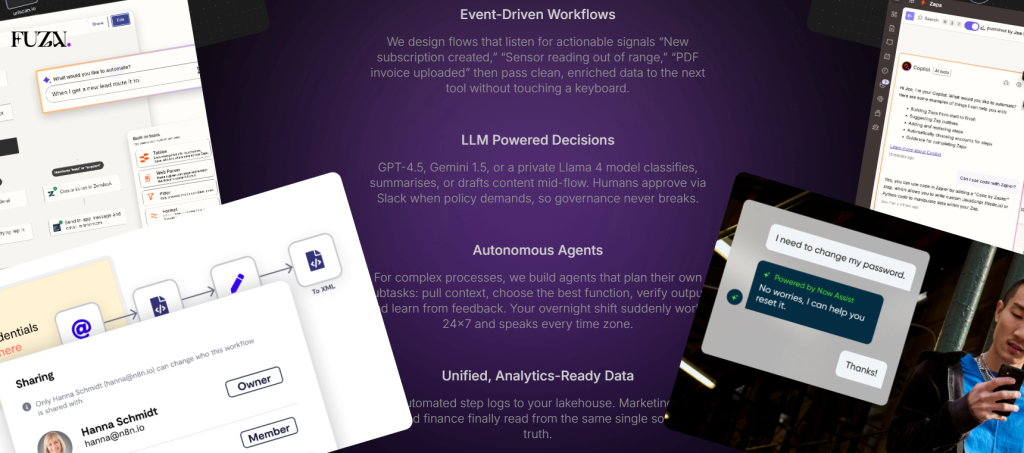
Most Australian businesses approaching Agentic AI already have AI subscriptions, automation tools and SaaS ecosystems in place. What they lack is the workflow architecture, operational orchestration and cross-platform integration that makes those components function as a coherent system. This is the problem we solve at FUZN, primarily.
Our approach begins with workflow mapping rather than tool selection, identifying the specific operational bottlenecks an organisation faces before determining which AI and automation components address them. This sequence matters. Tool selection that precedes workflow clarity consistently produces misaligned implementations.
The practical result is AI systems that are designed for your organisation’s actual operational context; connected to the CRM, ERP and communication platforms already in use, governed by approval workflows that reflect real decision-making authority and visible enough for leadership to understand what the AI is doing and why.