





The uncomfortable truth within any market segment is that the most innovative ideas do not fail because they are bad. They primarily fail because they are too slow to launch. Startup, innovation managers, product managers and mid-sized brands spend months, sometimes years, preparing to ‘go to market’ (GTM). Yet by the time they are ready, the market will have already moved on, or macro factors will have come into play, making the product not relevant for the market anymore. The worst is that these product teams will never even have tested their core assumptions with the real users.
Traditional agency models do not help such teams either. The endless strategy decks, bloated scopes, multiple stakeholder approvals and the chase for perfection often delay the only thing that matters, the proof that your idea works in the real world. In today’s hyper-distracted economy, speed to validation matters more than strategy on paper.
So, in the context of all of these, how can you position your product or brand to win? The success here comes from teams who do not overplan and rather test fast, learn faster and adapt in real time.
You do not need the perfect product to win. You need proof that someone wants it.
The Problem with Overbuilding
How many times have you seen this scenario: A company spends 6-12 months building a product, investing hundreds of thousands in development, design, branding and strategies, only to discover there was no market need for it by the time they are done building it. If you have been on the investing side of the table, you know this is a very common problem.
 Top article todayExcel-to-App Evolution: Why the Transformation Matters for SME’s
Take Quibi, the $1.75 billion short-form video startup that over-engineered an app without testing if users actually wanted short content only on mobile. The strategic leaders at Quibi envisioned that consumers would always want more entertainment, which is true. However, the app only offered short videos on mobile phones, for which they wanted the consumers to pay. Consumers were however already used to watching endless fun videos for free on apps like YouTube & TikTok; with Quibi, they had to pay for similar content and their UI (User Interface) was very controlling, hence the consumers hesitated on switching.

In another instance, Juicero, created a high-tech, Wi-Fi-connected juicer that cost hundreds of dollars. Who would not want to have their juice ready in a glass by the time they reached home after a long day? However, consumers quickly discovered if they could just squeeze by themselves, they could save hundreds of dollars and instead of buying pre-packaged juices sold by Juicero, they could also get to drink freshly squeezed juice. Despite clear feedback from consumers, the company ignored the criticism and continued promoting a product that solved a problem that was non-existent in the first place. The perfect example of out-of-touch tech innovation.
The underlying issues from these case examples are not that the business ideas were bad. It was their refusal to test early and listen to the consumer’s feedback. Companies will many times become obsessed with building the ‘perfect product version’ and assume the consumers will come on board. They fear failure so much that they delay launch indefinitely. Delay, however, is more dangerous than failure. At least failure gives you feedback.
“You cannot improve something if you never put it out into the world.”
What Smart Companies Do Instead
Smart brands or companies know this; the goal is not to build a masterpiece. It is to test a hypothesis, and all ideas are basically a hypothesis unless it is accepted by the market and the consumers. Smart companies launch Lean MVP’s (Minimal Viable Product), the smallest version of an idea that can validate or invalidate their hypothesis. They build agile loops that follow the rhythm. Test to Learn to Adapt and finally Scale.
 Read alsoMarketing Powered by AI: The Best AI Models for Every Role in 2025
Dropbox did not code a product first. They made a 3-minute explainer video to gauge interest and by doing so their waitlist exploded. Airbnb started by renting out air mattresses in their apartment to test if people would pay for strangers for a room. Even Glossier began by blogging to an audience before creating a product. The feedback provided by readers from their initial blog became product ideas for them. The takeaway from all of these examples is early testing helped these companies to validate demand and helped them attract early adopters and investors.
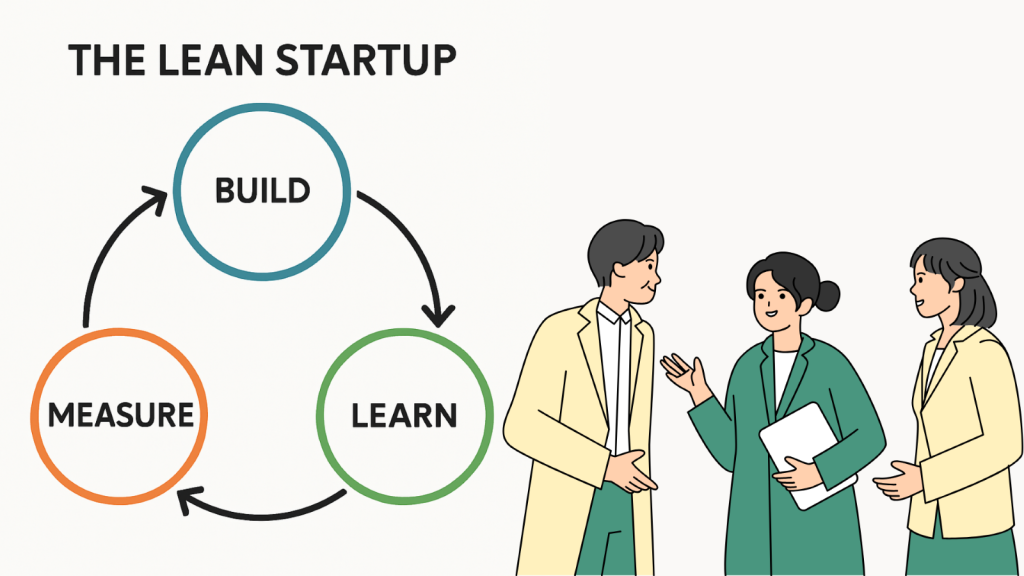
This approach known as the Build-Measure-Learn loop, a core principle of the Lean Startup Methodology, is not just for startups. It is how smart companies stay lean, learn fast and avoid wasting budget on assumptions. By quickly building a basic version of a product or idea, testing it with real users and collecting data, and then using those insights to improve or adjust, companies can move faster, reduce risk and avoid spending resources and time on ideas that do not actually work. Implementing this can help your company or brand to stay agile, adapt to changing market needs and user preferences, and make smarter decisions based on evidence.
“You do not need a developer team to test an idea. You need a user problem and a fast way to see if your solution works. Your first version of the idea does not have to work, it just has to prove that someone cares.”
Get the best ones in your inbox — no spam, unsubscribe any time.
The Psychology Behind It
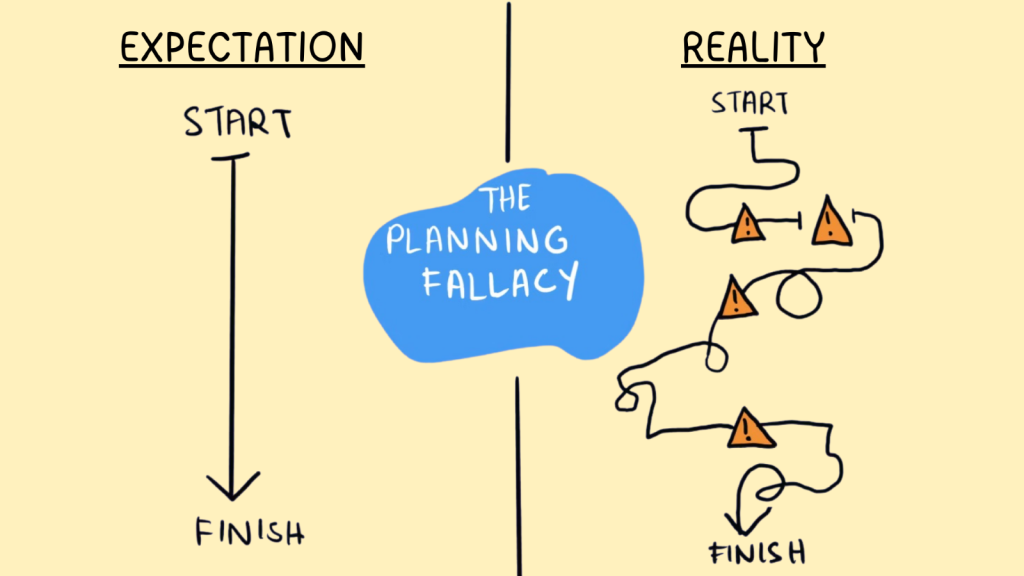
So why do brands wait so long to test? The undermining issues for this are perfectionism, ego and fear. It is easier to stay in planning mode than to put something in front of the users and risk rejection. This fear of launching or testing early often comes from common cognitive biases that cloud our judgement. One of them is planning fallacy, which tricks us into believing things will take less time than they actually do. We think our plans are solid and timelines are realistic but in reality, unexpected delays and complications almost always come up. Then there is the sunk cost fallacy, which convinces us to keep investing time, money or effort in something just because we have already put so much effort and time into it, even when it is no longer the right path. We stick with a decision not because it is working but because we are too afraid to walk away.
Ironically, the longer we delay testing or releasing something into the real world, the harder it becomes to make changes later. Teams get emotionally attached to their ideas. Stakeholders commit budgets based on early assumptions. The more invested everyone becomes, the more difficult it is to admit that a new direction might be actually better for the success of the project. This is why real progress requires a mindset of detachment. It means being willing to let go of ideas that do not work, no matter how much you believe in them. Being open to feedback, especially the ones that challenge your assumptions is also key.
“The biggest threat to innovation is not failure. It is an attachment to untested assumptions.”
The ROI of Speed
Think of your innovation cycle like a triangle: Time vs Cost vs Confidence. The faster you test, the cheaper will be your learning and the higher will be your confidence; moving forward. Delayed testing only leads to budget exhaustion, team burnout and investor frustration. All of which not only derails the project momentum but also tarnishes your personal or company reputation.
 Read alsoHybrid Work and AI: Why Most Companies are Getting it Wrong
Fast validation is the key to building momentum. When you test your ideas quickly, you create real confidence inside your team and reduce the risk of investing time and money in something which will not work. Plus, it shows your audience you are listening and ready to adapt based on their feedback. Speed does not mean rushing or delivering something sloppy. It means running intentional tests that focus on learning the viability of the idea, not chasing perfection.
Instead of guessing what your customers want, you get to gather real insights fast, so every next step of your build or development is smarter and more informed. Ask yourselves: How much time are we spending guessing instead of knowing? What if you tested your idea this week instead of months from now? Fast validation turns uncertainty into clarity and helps you build what people actually want, giving you ample return on investment.
So will your Innovation, Fail or Succeed?
By now you must have understood that it does not depend on how brilliant your idea is, it depends on what you do with it. Innovation rarely dies because the idea was bad. It dies in waiting rooms of indecision, buried under slide decks or lost in endless debates over colour palettes and font sizes. It dies when action is delayed in favour of perfection.
Success does not come from more meetings, more planning or more polished mockups. It comes from more proving, testing your idea in the real world, collecting real feedback and learning what actually works. You do not even need a finished product to start with. You just need validated feedback from real target audiences. Hence, let your audiences tell you what matters, not your assumptions.
If you are sitting on an idea, test it. If you have already built something, validate it. If you are not sure where to begin with, we will help you find the fastest, leanest path forward towards making your innovation a success. Innovation does not live in Figma files, it lives in data, decisions and doing. Do not let your next big idea fade into digital dust. Let us help you to bring it to life, one proof at a time.
At FUZN, we turn raw ideas into tested reality; fast. Before you pour in the budget, let us help you prove if your next big move actually works or not. Book your free 60 mins strategy call today and walk away with clarity, direction and a sprint plan to validate your idea within days.