




Google IO 2025 has just wrapped up, and the standing ovations have faded. Google just rolled out an incredible lineup of voice-enabled agents to book your appointments. Gemini weaving across your screen, helping you brainstorm, code, write, organise and conceptualise ideas, like a superhuman intern. Long context models remembering your style, your goals and your projects, like a seasoned executive assistant. All of it felt effortless, almost too effortless.
On the competitive spectrum, OpenAI just spent $6.5 billion to get hold of the iPhone guy, Jony Ive, the news of which must have cycled through your feeds. The big guys in tech are gearing up; doing everything to position themselves as the AI leader. In the aftermath of this spring’s tech showcases, one thing has become unmistakably clear: we have crossed a threshold that most of us did not even realise we were approaching. The shift from AI as a tool to AI as a cognitive collaborator.
We are no longer just users of AI tools; we are entering into a kind of thinking partnership that feels fundamentally different from any previous human-technology partnership.
How AI assistants became thinking partners and why that changes everything
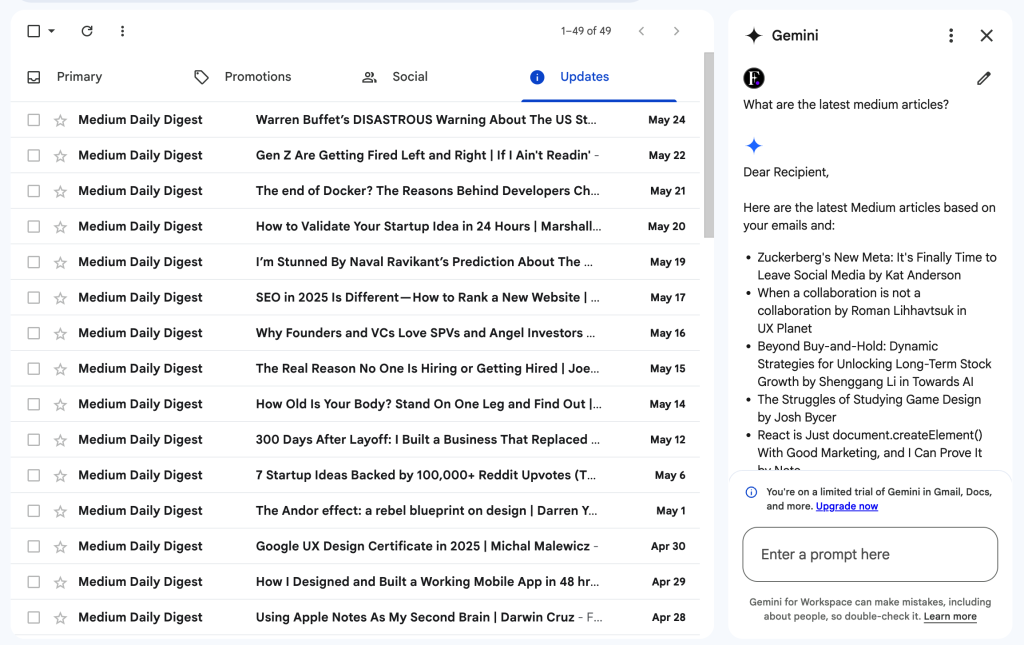
The demos from Google were undeniably impressive. Gemini, the AI assistant, can now manage complex workflows across multiple applications. Embedded systems which remember context from conversations weeks ago, if you opt in. Interfaces so intuitive they feel like extensions of our own thinking. However, strip away the theatrical lighting and corporate enthusiasm, and what emerges is something more profound than any single breakthrough; we are witnessing the emergence of AI as a genuine cognitive partner.
We are no longer asking, “Can it help me write this email?” We are asking, “How do we think through this problem together?” AI is now an assistant that thinks with you, a designer that works while you sleep, a tutor that knows your learning style and a teammate that never burns out. The implications of these developments ripple far beyond Silicon Valley conference halls. It is now in your inbox, your meetings, your kid’s homework and even your job descriptions.
 Top article todayExcel-to-App Evolution: Why the Transformation Matters for SME’s
‘Since AI is now part of your brainstorming, parenting and daily decision making, are these tools enabling you to give up control and help you discover who you actually are?’
What happens to your role when AI starts doing your job better than you
Walk into any modern office or, more likely, join any video call, and you will find people grappling with a new reality. Marketing teams edit AI-generated content rather than writing it from scratch, consultants using ChatGPT to build initial frameworks overnight and paralegals watching software review thousands of contracts in hours, instead of weeks. The deeper change is, however, psychological; professionals are experiencing a mix of excitement and existential anxiety as they compete with tools that can replicate skills they spent years developing.
The conversations have shifted from ‘How do we do this work?’ to ‘What are we here for if AI can do this?’ It is not just workflow disruptions; it is an identity crisis playing out in conference rooms and video calls across every industry. The threat is not that AI will replace human workers altogether. The threat is that organisations are discovering they can accomplish the same work with smaller teams supported by increasingly sophisticated AI agents and systems, like the one Google demonstrated during the I/O 2025 event.
The most vulnerable are not factory workers, whose jobs have long been targets of automation anxiety. Instead, it is knowledge workers performing routine cognitive tasks, the very people who thought their education and expertise made them automation-proof. Some of these jobs are at risk:
- Market analysts are creating reports that AI can now generate in minutes
- Content creators whose work can be replicated at scale
- Project managers whose coordination tasks are being absorbed by intelligent systems
This reshuffling is not just economic; it is existential. For workers across all generations who built their identities around their cognitive output, the question becomes, ‘What really defines one’s professional value when even machines can think?’

The Creativity Paradox
AI can generate 1,000 ideas but only you can spot the one that matters
Perhaps nowhere is this shift more apparent than in creative fields. AI can now generate compelling images, write coherent prose, compose music and even produce code often faster and more consistently than human creators. Yes, it was too vague and generic in the beginning, but over the years, the progress AI has made cannot be overlooked. Yet rather than eliminating creativity, these tools are revealing something unexpected about human creative value.
The most successful creators are not those fighting AI, but the ones who are learning to dance with it. Take filmmaker Reid Southen, who uses AI-generated concept art as a starting point but applies decades of visual storytelling experience to guide, refine and ultimately transform those outputs into something uniquely compelling. These professionals are discovering that creativity is not just about generation, it is about curation, refinement and the unexplained human judgment that determines what resonates and what does not! AI can produce a thousand variations on a theme, but it takes human intuition to recognise which one captures something true. A graphic designer might use AI to generate dozens of logo concepts in minutes, but only their human experience can identify which one will work across cultures and scale appropriately for different media, making that brand memorable.
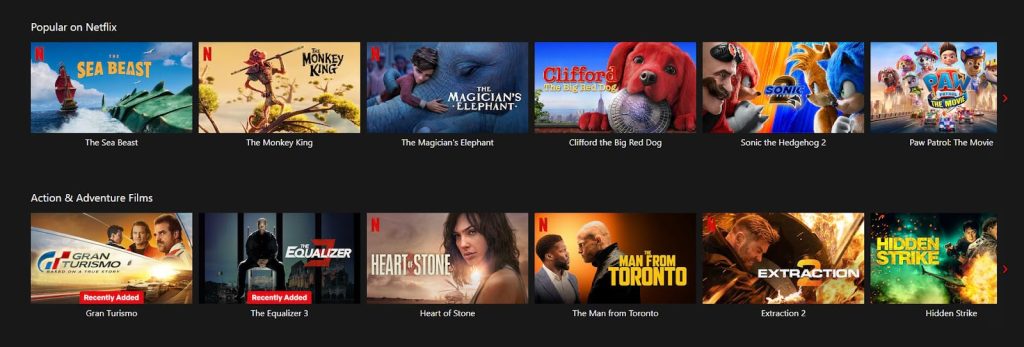
As AI takes over more of the routine thinking tasks, the skills that make us truly human like empathy, understanding different cultures, moral reasoning and having aesthetic judgement, are becoming more valuable than ever. Consider how Netflix’s content algorithms can predict what genres and actors might perform well, but it still takes human executives to greenlight projects that capture cultural atmosphere or navigate sensitive social issues.
 Read alsoConstruction Productivity in Australia: Build More Without Burning Out the People Who Build It
When AI generates customer service responses, companies are discovering they need human oversight more than ever to catch tone-deaf suggestions that might offend or misunderstand cultural contexts. In journalism, AI can draft articles from press releases, but editors with deep cultural knowledge are essential for recognising which stories matter to specific communities and how to frame them sensitively. Financial advisors find that while AI can optimise portfolios based on data, clients still need human guidance to navigate the emotional and ethical dimensions of major financial decisions, understanding when someone’s hesitation about an investment stems from cultural values rather than financial logic.
The Real New Skill? Thinking with AI
We are rapidly approaching a world where AI fluency becomes as fundamental as digital literacy was twenty years ago. Just as email proficiency transformed from a specialised skill to a basic workplace requirement, the ability to work effectively with AI systems is quickly becoming non-negotiable across industries. But this is not about learning to code or mastering technical skills. It is about developing a new kind of cognitive partnership that requires entirely different competencies than traditional computer literacy.
‘Everyday, you write, plan, problem solve or code at work. Have you thought about how it would look like to bring AI into those moments as a collaborator? Are you giving yourself the time and space to experiment with the AI shift?’
The most valuable professionals are learning to think alongside AI systems, developing an intuitive understanding of when to trust their output, when to push back and how to guide them toward better results. Consider how top-performing sales professionals now use AI to draft initial client proposals, but they have learned to recognise when the AI misses subtle client preferences or industry-specific concerns that could derail a deal. They know to prompt the AI with phrases like ‘make this more consultative’ or ‘adjust the tone for a risk-averse CFO’, then apply their relationship knowledge to refine the final output.

The key is developing what we might call ‘prompt literacy’, the ability to communicate effectively with AI systems to achieve human goals. This skill involves understanding how to frame questions to get useful responses, how to provide context that guides AI toward relevant solutions and how to iterate on prompts when initial results miss the mark. A marketing manager might start with a broad prompt like ‘create social media content for our product launch’, realise the output is too generic, then refine it to ‘create LinkedIn posts for cybersecurity professionals announcing our new endpoint detection tool, emphasising compliance benefits and using industry terminology.’
Get the best ones in your inbox — no spam, unsubscribe any time.
The best prompt engineers have learned to think both like human communicators and AI systems, understanding how to break complex requests into digestible components while providing the cultural and contextual clues that AI needs to produce relevant results. This requires a fundamental reframing of education and professional development. We need to teach people not just what to think but how to think in collaboration with artificial intelligence, developing the metacognitive skills to manage a thinking partnership where human creativity, judgment and accountability remain central, while AI handles information processing, pattern recognition and initial content generation.
What This Means for Society
The broader social implications of AI are still unfolding, but several trends are becoming clear, and they are likely to touch your life sooner than you think. Income inequality may worsen dramatically over the years as AI-fluent workers command premium wages while others struggle to adapt. We are already seeing this play out, marketing professionals who have mastered AI-assisted content creation are landing leading industry roles while their colleagues who rely on traditional methods face career stagnation or job redundancies.
Educational institutions face pressure to completely reconceptualise curricula. This is a topic of great concern because while the educational institutions are transitioning slowly, the workplace is transforming rapidly. For parents, the concern is that their children may graduate with degrees that do not prepare them for the work landscape they will actually enter. Universities are still teaching traditional research methods when students need to learn how to fact-check AI outputs. Business schools now must integrate prompt engineering skills within the curriculum to help their graduates lead within their domains.
Mental health challenges are emerging as people grapple with shifting professional identities, and these psychological impacts are proving deeper than expected. Recent studies document what researchers call ‘Job Displacement Anxiety,’ with EY research showing that most US workers fear AI’s impact on their roles. Resume Now’s 2025 report found that 43% of workers know someone who has lost a job due to AI. These are not just career concerns, they are existential questions about self-worth and purpose that are affecting sleep, relationships and overall, wellbeing. The psychological toll of constant adaptation is real, and we are only beginning to understand its scope and impact.
Yet there is also reason for cautious optimism. If managed thoughtfully, AI could liberate humans from routine cognitive drudgery, allowing us to focus on more meaningful, creative and interpersonally rich work. Imagine a world where teachers spend less time grading standardised assignments and more time providing personalised mentorship. Where doctors spend more time on actually caring for patients than on administrative documentation. The choices we make in the next few years will determine whether AI becomes a force for widespread human empowerment or accelerated inequality. Let’s choose wisely and with empathy.
 Read alsoLogistics Automation: What Could Your Business Do With 20 Extra Hours Every Week?
What stays human when machines do the thinking?
For individuals, the path forward requires both practical action and philosophical reflection. Experimenting with AI tools is not optional, it is essential for understanding both their potential and limitations. Equally important is the deeper work of defining what you bring, which cannot be automated; your perspective, your relationships and your ability to synthesise complex human needs.
Organisations face their own reckonings. The companies that thrive will be those that view AI not as a replacement for human workers but as an amplifier of human capabilities. They will invest in retraining, redesign workflows to optimise human-AI collaboration and maintain focus on the irreplaceable human elements of their value proposition.
In the meanwhile, policymakers will need to grapple with questions we are only beginning to understand: ‘How do we manage the social disruption of rapid job displacement? What safety nets are needed for workers in transition? How do we ensure the benefits of AI productivity gains are broadly shared?’
The Deeper Question
In trying to keep up with AI, are we becoming less human?
Ultimately, the AI revolution forces us to confront fundamental questions about human identity and purpose. If machines can handle an increasing share of cognitive work, what does it mean to be human in a professional context?
Perhaps the answer lies not in competing with AI, but in becoming more ourselves; more creative, more empathetic and more focused on the uniquely human experiences that give life meaning. The risk is not that AI will make us obsolete but that in trying to compete with machines, we will lose sight of what makes us irreplaceable.
‘As AI takes over more of our repetitive tasks, many of us feel pressured to become faster, smarter, more efficient and more machine-like. By chasing that, are we losing the very traits that make us human?’
Three Skills to Cultivate for the AI Era
As we navigate this transformation brought forth by AI, we at FUZN believe that harnessing these three capabilities will prove essential for thriving in an AI-augmented world:
- Cognitive Collaboration: Learn to think with AI, not just use it. Practice breaking down complex problems into components that AI can help you with, while identifying elements that require human judgment. Start with low-stake projects, like using AI to draft emails, then refine them with your voice and cultural awareness. The goal here is not to become dependent on AI but to develop an instinct for when and how AI amplifies your thinking.
- Quality Judgement: As AI generates more content, your ability to evaluate, curate and improve becomes invaluable. You need to train yourself to quickly assess AI outputs for accuracy, relevance and appropriateness. Practice asking, ‘What is missing here? What would a human in this situation need to know?’ This skill in particular will help differentiate you in a world flooded with AI-generated content.
- Irreplaceable Human Value: Double down on capabilities that remain distinctly human; emotional intelligence, cultural sensitivity, ethical reasoning and creative problem solving. These are not just soft skills anymore; they are your competitive advantage. You will also need to invest in understanding people, building relationships and developing the wisdom to navigate complex human situations, which will require empathy, ethical judgement and cultural understanding.
The AI revolution is here, whether we are ready or not. The question is not how to stop it but how to ensure it serves human flourishing rather than diminishing it. This is a challenge that will require our most distinctly human capabilities: wisdom, compassion, and the courage to shape technology rather than be shaped by it. The future is not being written by algorithms alone. It will be written by how we choose to live and work alongside them.
At FUZN, we work with mission-driven teams who are looking to build meaningful, AI-aligned futures. Get in touch and let’s open the conversation.