
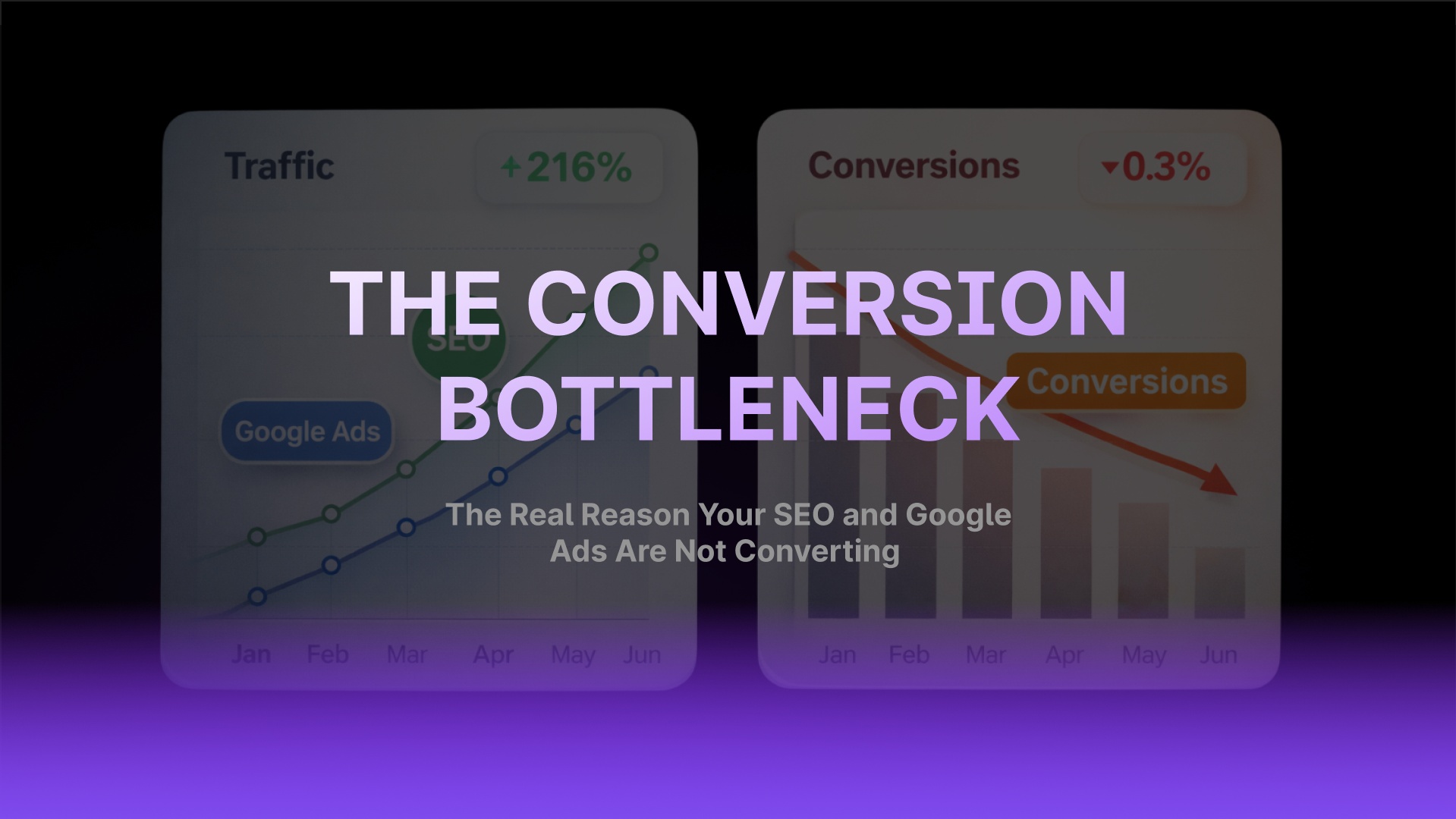




Have you ever watched your Google Analytics dashboard light up with traffic, only to feel that sinking disappointment when you check your actual leads or sales? You are not alone.
Most Australian businesses are pouring thousands of dollars into SEO and Google Ads each month and far too many of them are getting impressive traffic numbers with heartbreakingly poor results. You can rank on page one of Google for your dream keywords, buy premium ad placements and still watch clicks evaporate into nothing; no leads, no calls, no sales.
Ever wondered what was going wrong? The uncomfortable truth is this, traffic does not convert itself.
The Traffic Illusion – Why Clicks Mean Nothing Without Context
Let me ask you something, when was the last time you celebrated a traffic spike in your analytics? Did that celebration translate into actual revenue growth or did it just fade away when you realized those visitors never actually became your customers?
SEO and SEM are genuinely excellent at their core job; bringing people to your website. They excel at visibility, at capturing attention, at putting your business in front of people who are actively searching for solutions. However, here is where most businesses make a critical strategic error; they assume that once visitors arrive, their job is done. It has not though.
Once those hard-earned visitors land on your site, the landing page experience becomes the sole deciding factor in whether they convert, bounce immediately or forget you ever existed. Also, when businesses send expensive paid traffic straight to a generic homepage that was never designed for conversion, those conversion rates suffer dramatically.
In this article, we will unpack exactly why your SEO and Google Ads may be failing to convert and how the landing page, not the campaign strategy itself, is often the weakest link in the entire performance marketing chain. We will also provide clear, actionable steps that Australian business owners can take to fix this critical problem, complete with real benchmark data you can use to evaluate your own performance right now.
Why Traffic Alone Is Never Enough
Here is a question worth considering “What is traffic actually worth to your business?” The answer to this question is very simple; traffic is only valuable when it turns into a measurable action. Those actions might be a qualified lead, a phone call, a completed sale or a newsletter signup. Without that conversion moment, traffic is just a vanity metric; not making you any money.
Most organisations however, still fall into the trap of separating their marketing channels rather than treating the entire customer journey as an integrated conversion system. They celebrate SEO wins in isolation, they optimize Google Ads campaigns based purely on click-through rates and they rarely stop to ask, “What actually happens after someone clicks?”
SEO Gets Clicks but Not Always Customers
SEO brings organic visitors who are searching with specific intent, which is valuable. These are people actively looking for information, solutions or products related to what you offer. But does intent alone guarantee conversion? Absolutely not.
According to industry benchmarks gathered across thousands of websites, SEO traffic typically converts at around 2.4% on average across all industries. This figure varies significantly based on page type and the specific offer being presented. For example, well-optimized service landing pages tend to convert at approximately 2.7% to 2.9%, while informational blog posts might convert at lower rates because visitors are still in research mode rather than purchase mode.
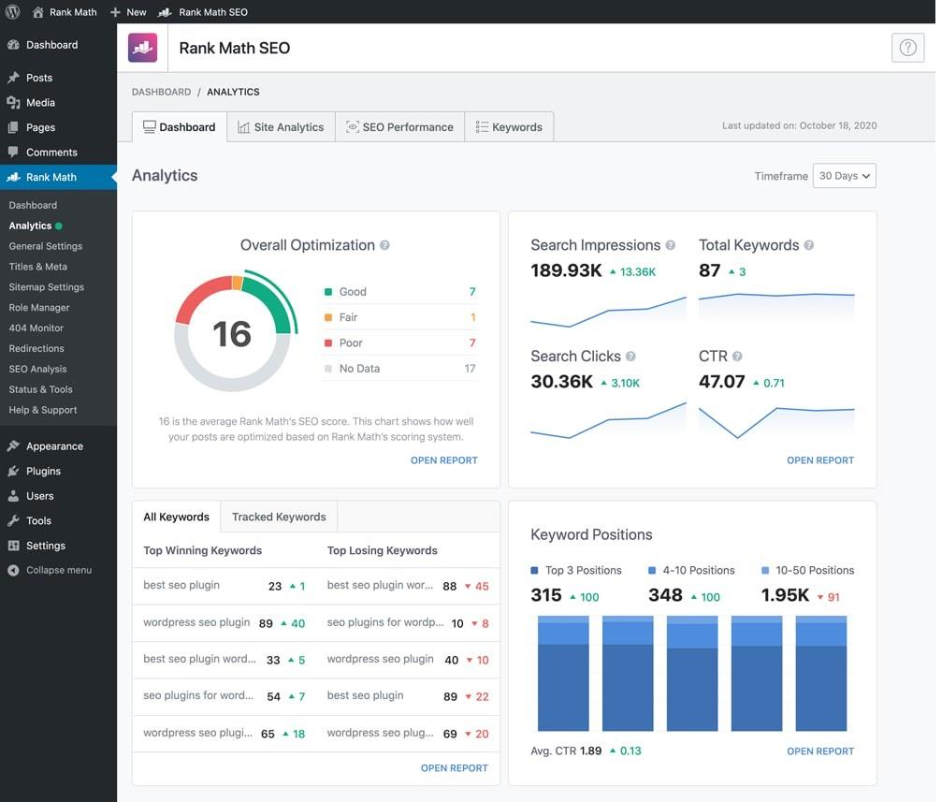
So, if you are ranking well for your target keywords but your conversion rate is not meaningfully above these baseline rates, the issue is not your visibility or your search rankings. The issue is what happens after the click. Your SEO is doing its job however your landing page is failing at its job.
Sarah Chen, owner of a Sydney-based accounting firm, experienced this firsthand. She wrote to us, “We were ranking number one for ‘small business accountant Sydney’ and getting 300 clicks a month. We thought we had made it. Yet we were only getting about four actual inquiries. It was devastating to realize all that traffic was essentially worthless because our homepage was confusing and gave people no clear reason to contact us.”
A practical next step is to check whether your landing copy and offer tap into subconscious cues; a focused read on neuromarketing concepts shows which mental triggers most campaigns miss and how to reframe your messaging so the traffic you already have starts to convert.
SEM Costs Money for Every Click, But Not All Clicks Convert
Google Ads represents an even more urgent conversion challenge because unlike organic traffic, you are paying real money for every single click. It is an excellent way to capture high-intent searchers who are ready to take action, yet even with this built-in advantage, average conversion rates vary dramatically by industry and campaign quality.
The 2025 benchmarks indicate that a “good” conversion rate for Google Ads campaigns typically falls between 2% and 6% and can climb even higher (sometimes reaching 10% or more) when the landing experience perfectly aligns with both the user’s search intent and their expectations set by your ad copy.
Here is the sobering reality though; data from comprehensive PPC (Pay-per-click) audits suggests that 88% of keywords in the average PPC account generate zero sales. Let this sink in for a moment. Most businesses are paying for clicks across hundreds of keywords that never, ever convert into actual customers. This happens because the experience waiting at the other end of that click is either poor, irrelevant, confusing or misaligned with what the ad promised.
Traffic without conversion is wasted spend and this truth applies equally to both organic and paid channels. The question you need to ask yourself is not “How much traffic am I getting?” but rather “How much of that traffic is actually doing what I need it to do?”
The Landing Page Is Where Most Campaigns Actually Fail
The essential insight that most marketing discussions completely miss is that your landing page is the actual switch that turns clicks into conversions. No matter how brilliant your SEO strategy is, no matter how targeted your Google Ads campaigns, no matter how much money you pour into driving traffic, if your landing page fails to convert, your entire marketing investment delivers minimal return.
Despite this obvious truth, many Australian businesses continue to make these same strategic mistakes which kill conversion rates before visitors even have a chance to engage:
1. Sending Paid Traffic to a Generic Homepage
This is arguably one of the single biggest reasons SEM campaigns fail to deliver ROI. Think about the visitor’s experience; they search for something specific, they see an ad that promises a specific solution, they click with a specific intent and then they land on a homepage that tries to be everything to everyone.
The result? Visitors immediately lose focus, get distracted by navigation menus and multiple competing messages and bounce away. Generic homepages are rarely designed to persuade quickly or remove friction. They are designed to orient new visitors to your entire business, which is the opposite of what a conversion-focused experience should do.
Your homepage serves a legitimate purpose for general brand awareness and exploration, but it should almost never be the destination for paid traffic. When someone clicks an ad for “emergency plumber inner west Sydney,” they should land on a page specifically about emergency plumbing services in the inner west, not your homepage with your logo, your history and links to all seventeen services you offer.
2. Landing Pages Are Not Built for Conversion
Here is a troubling statistic that should change how you think about page design; research shows that 48% of visitors exit a landing page without engaging any further if the offer or message is not immediately clear or compelling. Nearly half of your traffic makes a snap judgment within seconds and decides to leave.
 Top article todayExcel-to-App Evolution: Why the Transformation Matters for SME’s
Why does this happen so frequently? Because most landing pages are not actually built with conversion as the primary goal. They are built as informational pages, as general content hubs or as afterthoughts to campaigns. They lack the strategic elements that high-performing landing pages always include.
Landing pages that consistently convert at above-average rates are not just pages with a contact form slapped at the bottom. They are carefully constructed strategic assets that include:
- A clear, specific value proposition that tells visitors exactly what they will get and why it matters to them within the first three seconds of arriving
- One focused call to action that eliminates confusion about what step to take next
- Trust elements including social proof such as testimonials, reviews, client logos, industry certifications and case study snippets that reduce psychological friction and reassure visitors they are making the right choice
- Fast load speed because every second of delay costs you conversions, with studies showing that a one-second delay can reduce conversions by up to 7%
- Simple, focused navigation that removes distractions and keeps attention on the conversion goal
3. Poor Mobile Design and User Experience Kill Conversions Before They Start
When was the last time you actually tested your landing pages on a mobile phone? Not just glanced at them but actually went through the entire conversion process as a user would?
This matters because almost all traffic, especially in Australia, now comes via mobile devices. Current data suggests that mobile users account for nearly 83% of traffic on landing pages. More than eight out of every ten visitors are viewing your carefully crafted landing page on a screen that is roughly the size of their palm.
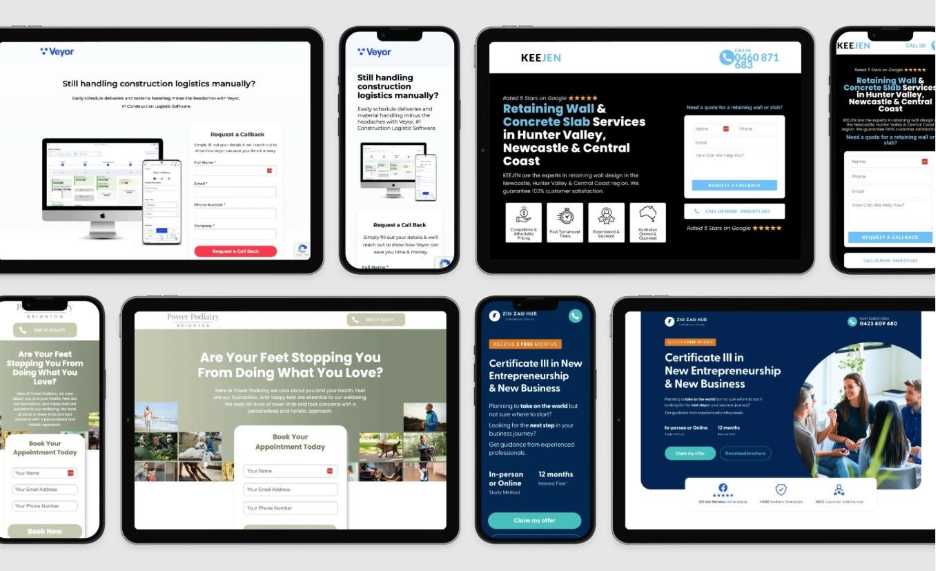
Yet despite this overwhelming mobile dominance, many landing pages are still designed with a desktop-first mindset. Forms are too long for mobile users to complete without frustration. Buttons are too small to tap accurately. Critical information sits below the fold where mobile users never see it. Images load slowly or break the layout on smaller screens. The result is a frustrating experience that causes visitors to abandon before conversion ever becomes a realistic possibility.
Jessica Wu, who runs a Gold Coast-based fitness studio, learned this lesson in an expensive way. She shares, “We launched a new landing page for our personal training packages and it looked stunning on my laptop. When I actually tried to book a session using my phone though, the form was nearly impossible to fill out. The fields were tiny, the page kept jumping around as things loaded and the submit button was half hidden. We were losing leads not because people were not interested but because we made it physically difficult for them to convert.”
Benchmarks You Can Use Today to Evaluate Your Performance
Before we explore in depth what makes landing pages convert at high rates, it is genuinely useful to understand what realistic metrics look like across different industries and channels. Without this context, you have no way of knowing whether your current performance is acceptable, excellent or catastrophically underperforming.
Landing Page Conversion Rates Across Industries
The median landing page conversion rate across all industries sits at approximately 6.6%. This means that if you are converting at this rate, you are performing at an average level. Top performers in optimized environments achieve substantially higher rates, especially when their pages are carefully tailored to match specific visitor intent and deliver exceptional user experiences.
Some industry benchmarks show landing page conversions climbing above 10% to 12% in environments with strong creative execution or compelling offers. In specialized niche verticals with highly targeted traffic and well-designed conversion funnels, conversion rates can reach 20% or even higher.
What does this mean for you practically? If your landing pages are converting at 2% or 3%, you have significant room for improvement. If you are hitting 8% to 10%, you are performing well but can likely optimize further. If you are above 15%, you are doing something right that you should analyze and replicate.
Channel-Specific Conversion Benchmarks
Different traffic sources convert at different baseline rates, and understanding these differences helps you set realistic expectations:
SEO traffic tends to convert at approximately 2.4% on landing pages where content is well-aligned with search intent. This lower rate compared to overall landing page averages reflects the fact that organic search includes a mix of informational and transactional intent. Some visitors are still researching, while others are ready to buy.
Google Ads campaigns often convert better than display advertising or social media traffic, with averages typically ranging from 2% to 7% or above when landing pages are tightly matched to ad messaging and visitor intent. The reason for this higher potential is simple: people who click ads are often further along in their decision journey and have clearer intent.
Australian-Specific Benchmarks
Local analysis of Australian business performance suggests that some industries in the Australian market may see slightly lower baseline conversion rates compared to global averages. For example, eCommerce businesses in Australia often see conversion rates around 1.7% to 1.8%, which is somewhat below the global eCommerce average of approximately 2.3% to 2.5%.
Why might this be? Factors including smaller market size, higher shipping costs and strong competition from international retailers all play roles. However, this gap also represents a significant opportunity. Australian businesses that invest in better landing page optimization, clearer value propositions and improved user experiences can gain substantial competitive advantages in their local markets.
These benchmarks are not perfect prediction tools because every business operates in unique circumstances with different offers, audiences and competitive dynamics. However, they serve as excellent reference points for evaluating whether your landing page is underperforming relative to what is reasonably achievable.
Why Your SEO, SEM and Landing Pages Must Work as One Integrated System
Here is a mistake that costs businesses thousands of dollars every month; treating SEO, SEM and landing pages as separate, disconnected marketing activities. Most businesses organize these functions into silos. The SEO team focuses on rankings and traffic. The PPC team focuses on clicks and cost-per-clicks. The web team updates pages when someone remembers to ask them. Nobody is looking at the entire system as a unified conversion machine.
This fragmented approach guarantees suboptimal results. Here are why these three elements must work together as one cohesive system:
SEO: Your Intent and Trust Builder
Good SEO brings visitors who are already actively searching for solutions related to what you offer. These are not cold prospects; they have demonstrated intent by typing out a query into Google. However, organic visitors need clear, immediate guidance on what to do next and this is precisely where landing page alignment becomes critical.
Consider the visitor journey; if your SEO content ranks well for research-oriented keywords like “how to choose a web developer” or “signs you need a new roof,” you are likely attracting early-stage intent visitors. These people need educational content, trust-building information and gentle guidance before they are ready to make a purchase decision. If you hit them immediately with an aggressive sales message or a “Buy Now” button, they will bounce.
Conversely, if you rank for transactional keywords like “web developer Sydney price” or “emergency roof repair near me,” visitors have much higher intent and are ready for direct offers. The wrong landing page experience here, such as sending them to a general information page when they want pricing and contact options, deflates your conversion potential dramatically.
SEM: Your Demand Capture Mechanism
Google Ads excels at targeting transactional intent. People who click ads are typically further along in their decision process than organic searchers. They have seen your promise, they have chosen to pay attention to your specific offer, and they expect immediate relevance.
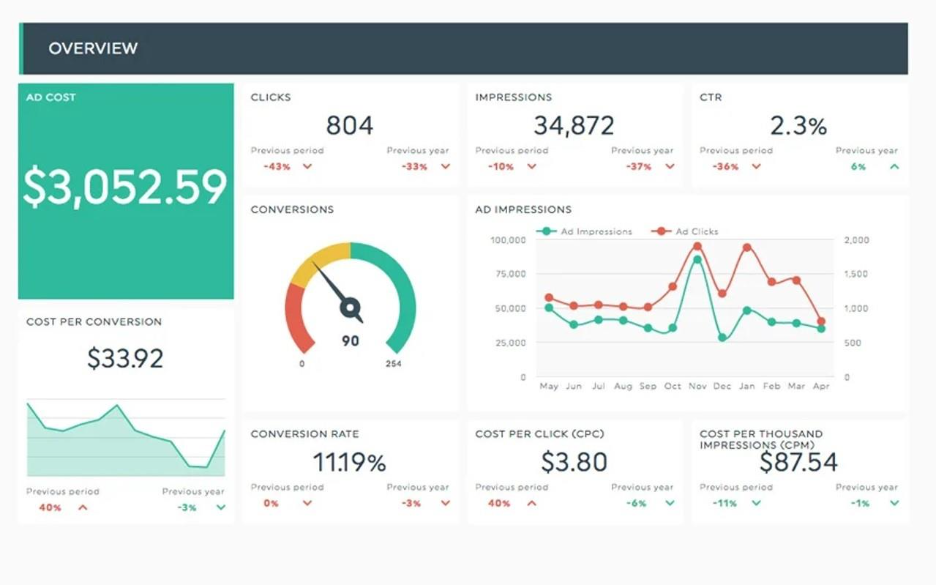
Paid traffic expects crystal-clear offers and simple next steps. If your landing page structure, messaging and design are not built to serve the exact promise made in your ad copy, visitors will not convert even though they clicked. The disconnect creates immediate distrust and confusion.
Tom Anderson, who manages Google Ads for his Brisbane-based software company, explained the moment this clicked for him: “We had an ad that said ‘Get Your Free 14-Day Trial’ but our landing page had three different calls to action: schedule a demo, download a guide or start a trial. We thought we were giving people options, but we were actually just confusing them. When we created a dedicated page with only the trial signup, our conversion rate went from 3% to 8% literally overnight.”
If you want to turn improved landing pages into longer-term visibility, consider how Google sees your content. Adding FUZN to Google Preferred Sources helps our work appear more often for relevant searches, backed by copy Verified Customer Reviews rated 5.0★ by Australian businesses like yours.
 Read alsoStrait of Hormuz Chokehold Warning Lessons for Australian Businesses!
Landing Page: Your Conversion Engine
The landing page represents the “moment of truth” in your entire marketing system. This is where all your investment in visibility, traffic and attention either pays off or evaporates.
Ask yourself these diagnostic questions about your current landing pages:
- Does the headline immediately align with the search query or ad that brought the visitor here? If someone searches for “family law attorney Canberra” and your headline says “Welcome to Smith Legal Services,” you have lost them already.
- Is the call to action crystal clear and singular? Can visitors immediately understand what you want them to do next or are they confronted with multiple options that create decision paralysis?
- Does the page answer critical trust signals? Do you provide testimonials with real names and photos? Do you display relevant numbers like “500+ happy clients” or “15 years in business”? Do you show industry certifications or awards that establish credibility?
- Is the mobile experience clean, fast, and genuinely usable? Not just responsive but actually optimized for how people use phones?
A landing page that successfully addresses all these elements transforms traffic into action. A landing page that fails at even one of them creates a conversion bottleneck that undermines your entire marketing investment.
Key Elements of High-Converting Landing Pages: What Actually Works
Conversion does not happen by accident or luck; it happens by design. After analyzing thousands of high-performing landing pages across industries, clear patterns emerge. Successful landing pages consistently share a core set of characteristics that you can implement in your own pages starting today:
1. A Clear, Specific Value Proposition That Speaks Directly to Visitor Intent
Your visitors should understand exactly what you are offering and why it matters to them within the first three seconds of arriving on your page. Not three minutes, not after scrolling, not after reading three paragraphs. Three seconds.
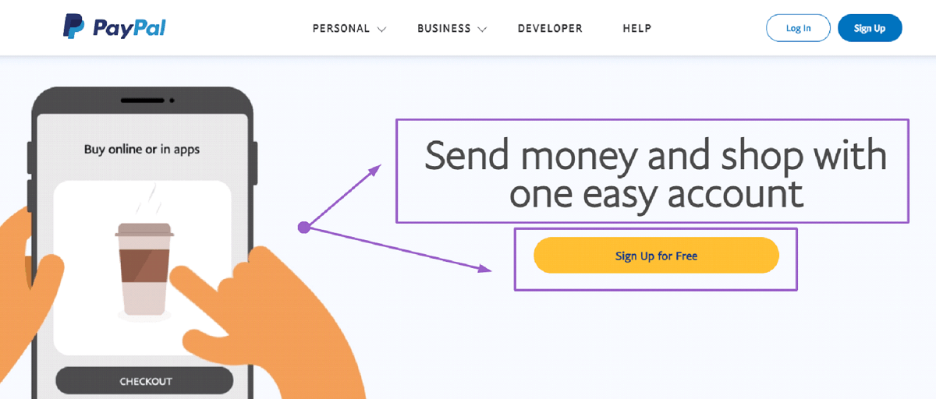
Generic, abstract language loses attention immediately. Phrases like “Industry-leading solutions” or “Committed to excellence” mean absolutely nothing to visitors who need to quickly understand if you can solve their specific problem.
Compare these two headlines:
- Weak: “Professional Marketing Services for Your Business”
- Strong: “Generate 3x More Qualified Leads in 90 Days Without Increasing Your Ad Spend”
The second headline is specific, outcome-focused and immediately relevant to a business owner frustrated with poor lead generation. It tells visitors exactly what they will get and creates a compelling reason to keep reading.
2. One Clear, Focused Goal That Eliminates Decision Paralysis
Do not dilute your landing page with multiple competing calls to action. The highest-performing landing pages focus obsessively on a single conversion objective.
Every element on the page should support that one goal. Every image, every word of copy, every design choice should either move visitors closer to taking your desired action or should be removed entirely.
Research consistently shows that landing pages with one call to action convert at significantly higher rates than pages offering multiple options. Why? Because every additional choice you present increases cognitive load and creates friction. Visitors have to think harder, weigh out options and consider alternatives; this thinking creates opportunities for doubt, distraction and departure.
Give visitors one clear path forward, make it obvious, make it easy and watch your conversion rates climb.
3. Social Proof and Trust Signals That Reduce Psychological Friction
Here is a fundamental truth about human psychology; we trust the experiences of others more than we trust marketing claims. When visitors land on your page, they are inherently skeptical. They have been burned before, they have seen exaggerated promises and they are wary.
Trust elements dramatically reduce this friction and reassure visitors that choosing you is a safe, smart decision. The most effective trust signals include:
- Testimonials with specificity: Real names, photos and specific results create credibility. “John S. from Sydney” saying “Great service” does nothing. John Smith with his photo saying “FUZN helped us increase conversions by 47% in three months, generating an additional $180,000 in revenue” creates powerful social proof.
- Client logos and recognizable brands: If you have worked with companies people recognize, show those logos prominently. It transfers trust from those brands to you.
- Numbers and data points: “500+ Australian businesses trust us” or “98% client satisfaction rate” provide concrete evidence of your track record.
- Industry certifications and awards: Relevant credentials establish expertise and authority in your field.
Research consistently demonstrates that pages incorporating these trust elements convert significantly better than pages without them, often showing improvements of 20% to 40% or more.
4. Minimal Distractions That Keep Focus on Your Conversion Goal
Here is a counterintuitive principle that many businesses resist: fewer options lead to more conversions.
Get the best ones in your inbox — no spam, unsubscribe any time.
Statistical analysis across thousands of landing pages indicates that fewer links, navigation options and competing messages correlate with meaningfully better conversion outcomes. Clean, focused pages reduce choice paralysis and help users concentrate on the single action you want them to take.
This means your highest-converting landing pages should often:
- Remove or minimize header navigation that lets visitors wander away
- Eliminate sidebar links and widgets that distract attention
- Avoid links to other pages or external content unless absolutely necessary
- Keep the visual design simple and purposeful rather than busy or complex
Every element that does not directly support your conversion goal is a potential leak in your funnel. Be ruthless about removing distractions.
5. A Fast, Mobile-First Experience That Works Flawlessly on Small Screens
We delved on this topic earlier but it deserves deeper emphasis because this is where so many businesses fail without realizing it.
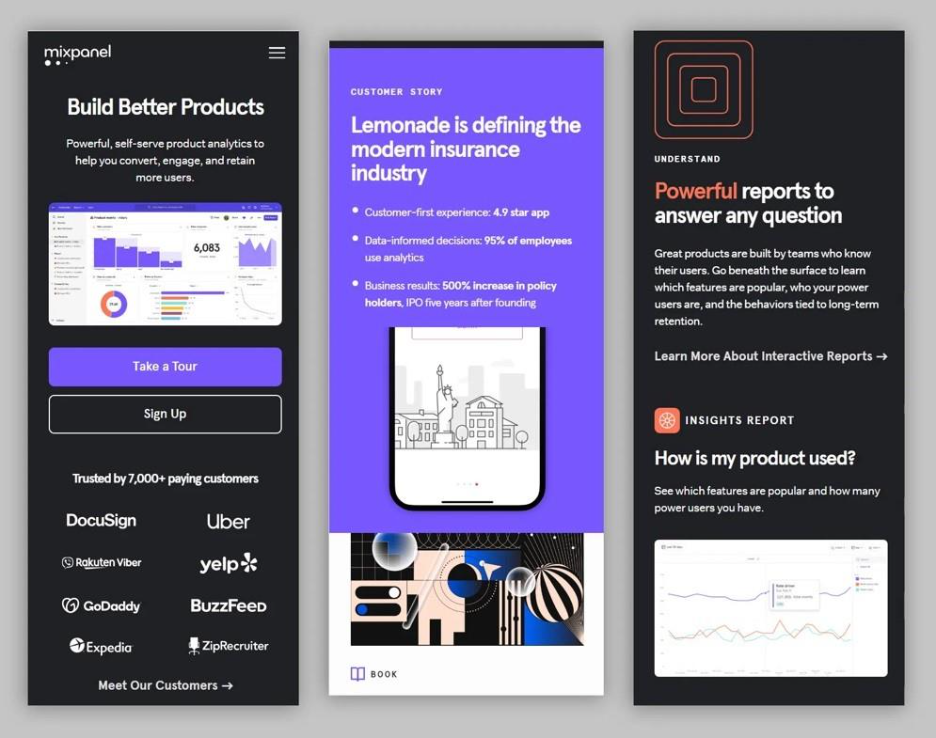
With more than 80% of your landing page traffic arriving on mobile devices, your mobile experience is not secondary; it is primary. A page that loads fast and feels intuitive on a smartphone can dramatically influence your conversion rates, while a clunky mobile experience kills conversions before visitors even see your offer.
Mobile optimization means:
- Lightning-fast load times: Mobile users are even less patient than desktop users. If your page takes more than three seconds to load, you are losing conversions with every additional second of delay.
- Simplified forms: Long forms are painful on mobile. Minimize required fields, use appropriate input types (like numeric keyboards for phone numbers) and consider progressive disclosure where you collect information across multiple screens.
- Large, tappable buttons: Your call-to-action buttons need to be large enough to tap easily with a thumb, with adequate spacing around them to prevent accidental clicks.
- Readable text without zooming: If users have to pinch and zoom to read your copy, they will leave instead.
- Content hierarchy optimized for small screens: What appears “above the fold” on mobile is drastically different from desktop. Your most critical elements must appear immediately on small screens.
6. Personalized Calls to Action Tailored to Specific Audiences
Generic calls to action like “Submit” or “Click Here” dramatically underperform compared to personalized, specific CTAs that speak directly to visitor intent.
Landing pages that tailor their calls to action to specific audience segments or search intents consistently outperform pages with generic buttons. Research shows that personalized CTAs can increase conversions by 40% or more when implemented thoughtfully.
What does personalization look like in practice? Instead of “Get Started,” consider:
- “Show Me My Custom Quote” for pricing pages
- “Book My Free Strategy Session” for consultation offers
- “Download My Free Guide Now” for lead magnet pages
- “Start My 14-Day Trial” for software products
The difference is subtle but powerful. Personalized CTAs feel like they are speaking directly to the individual visitor, while generic CTAs feel like mass marketing.
Real-World Problems Australian Businesses Are Facing Right Now
Let me share some of the most common scenarios we encounter when working with Australian SMEs. Perhaps you will recognize your own business in one of these patterns:
SEO Drives Traffic Without Meaningful Conversion Progress
Too many Australian websites rank well for broad, high-volume keywords and earn impressive click numbers in their analytics but fail to convert those visitors into customers because the pages they rank with are general content pages, not transactional landing pages designed for conversion.
For example, a Melbourne law firm ranks first for “family law advice” and gets 400 visitors per month to their blog post on the topic. But that blog post has no clear call to action, no compelling reason to contact the firm and no trust signals that would convince readers to take the next step. The result will be lots of traffic, almost no inquiries.
The fix requires intentionally creating transactional landing pages alongside informational content and strategically linking between them to guide visitors from education to conversion.
SEM Costs Are Ballooning Without Proportional ROI
A local survey of Australian small and medium businesses suggests that approximately 65% of Australian SMBs ran PPC campaigns in 2025. That represents significant market adoption of paid advertising. However, as mentioned earlier, research indicates that as many as 88% of keywords in average accounts generated no sales, which points to serious systematic inefficiency in conversion pathways.
This clearly shows that Australian businesses are collectively spending millions of dollars per month on Google Ads that drive clicks but not customers. The campaigns technically work from a traffic perspective but the landing experiences fail to capitalise on that expensive attention.
Landing Pages Are Treated as Afterthoughts Rather Than Strategic Assets
Business owners and marketing managers tend to focus intensely on search rankings and advertising budgets. These are visible, measurable and feel like the “real” marketing work. Landing pages, by contrast, often get treated as technical details; basic necessities that just need to exist.
This backwards prioritization guarantees poor results. Your ads bring attention but your landing pages must close the deal. Without equal focus on the conversion experience, you are essentially paying to drive traffic to a salesperson who mumbles, looks unprofessional and cannot articulate why anyone should buy from you.
Why Many Marketers and Agencies Get This Wrong
 Read alsoHybrid Work and AI: Why Most Companies are Getting it Wrong
There is a common, dangerous misconception that pervades digital marketing, “If the campaign is working, the landing page will convert.”
This illusion can be incredibly costly. Many agencies optimize exclusively for metrics they control directly, such as click-through rates, cost per click and ad position. These metrics improve, the dashboard looks green and everyone feels good about the campaign performance. But the business owner never sees proportional revenue impact because conversions were never the actual focus.
The uncomfortable reality is this, conversions come from the combination of well-aligned landing page experience, crystal-clear messaging and genuine offer relevance. You cannot optimize your way to conversions by adjusting bids or adding keywords if your landing page fundamentally fails to convert the traffic you are already getting.
Experienced PPC practitioners reported that when they redesigned client landing pages to clarify conversion goals, systematically remove distractions and tightly align messaging with ad copy, conversion rates nearly doubled without changing a single keyword or bid strategy. Not one element of the campaign changed. The only variable was the page experience and message clarity, including better strategic placement of proof elements and calls to action.
Think about what that means for your business; you could potentially double your leads or sales without increasing your advertising budget by even one dollar. You just need to fix the conversion bottleneck that currently exists at the landing page level.
How to Fix the Conversion Bottleneck: A Practical Action Plan
Here is exactly how savvy Australian businesses should rethink their approach to landing pages and conversion optimization:
Step 1: Start With the Conversion Goal Before Anything Else
Before you spend another dollar on SEO or SEM, before you write another word of copy or choose another stock image, define with absolute clarity:
- What is the desired action you want visitors to take? Be specific. “Contact us” is too vague. “Schedule a 30-minute strategy call” or “Request a detailed quote” are specific.
- What does a “conversion” actually look like for this page? Is it a form submission? A phone call? A product added to cart? An email signup? Define it precisely.
- What will the landing page explicitly ask visitors to do? Your call to action should be singular, clear and aligned with your conversion definition.
Without clarity on these fundamentals, you cannot build an effective landing page because you have no clear target to optimize towards.
Step 2: Align Message, Offer and Intent Across Every Touchpoint
Many campaigns fall apart because there is a disconnect between what your ad or search result promises and what your landing page delivers.
Ensure your headline, sub-headline and call to action directly reflect both the ad copy that brought visitors to your page and the underlying search intent that motivated them to click in the first place.
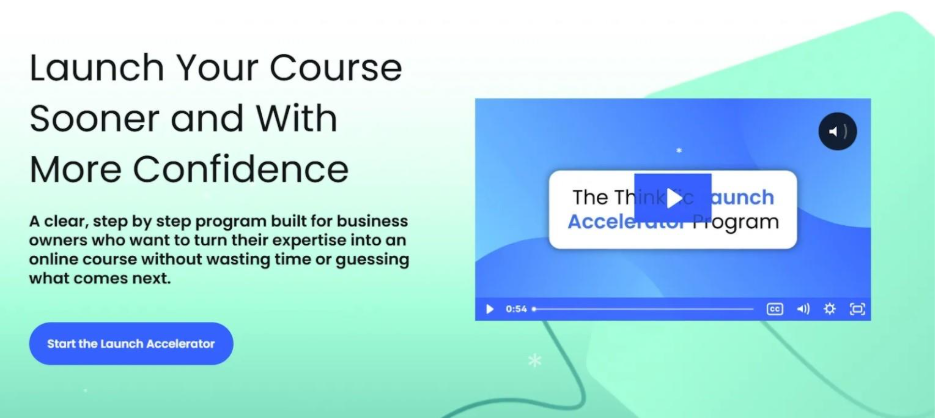
If your Google Ad says “Get Your Free Roof Inspection in 24 Hours,” your landing page headline better say something like “Schedule Your Free Roof Inspection Today – Appointments Available Within 24 Hours.” The language should match, the offer should match and the urgency should match.
Any misalignment creates subconscious friction that reduces trust and lowers conversions.
Step 3: Build Dedicated Landing Pages With Specific Purposes
Stop sending all your traffic to the same generic page or your homepage. Create dedicated landing pages for specific campaigns, specific offers and specific audience segments.
Build different landing pages for different conversion goals:
- Lead magnet download pages for ebooks, guides or resources that collect email addresses
- Consultation booking pages that make scheduling a call or meeting frictionless
- Quote request pages for services where pricing is customized
- Product demo signup pages for software or complex products that require demonstration
- Event registration pages for webinars or in-person events
Each page should focus on one singular goal with no distractions or competing priorities.
Step 4: Add Trust and Proof Elements Strategically
Testimonials, specific results, data points and case studies all serve to reassure visitors and reduce the psychological friction that prevents conversion.
Do not bury your social proof at the bottom of the page where only 20% of visitors will ever see it. Place trust elements:
- Near your primary headline to establish credibility immediately
- Adjacent to your call-to-action button to reduce hesitation at the moment of decision
- Throughout longer pages to maintain confidence as visitors scroll
Remember that effective testimonials are specific, credible and relevant. They include real names, ideally photos and concrete outcomes. “Sarah helped us achieve a 63% increase in qualified leads within 90 days” is infinitely more powerful than “Great service, highly recommend.”
Step 5: Test and Improve Continuously With Systematic A/B Testing
Even small adjustments to your landing pages can lead to substantial improvements in conversion performance, often driving gains of 10% to 30% or more from single changes.
Implement systematic A/B testing to compare:
- Different headline approaches (benefit-focused vs curiosity-driven vs outcome-specific)
- Various hero images or background visuals
- Call-to-action button text, color, size and placement
- Form length and required fields
- Trust signal placement and prominence
- Different opening copy approaches
The key word here is “systematic.” Random changes without measurement teach you nothing. Structured tests with clear hypotheses and sufficient traffic to reach statistical significance reveal what actually works for your specific audience.
Jennifer Brooks, who manages marketing for a national training company, shared her testing experience, “We thought our landing page was pretty good at 5% conversion, so we almost did not bother testing. But we ran an A/B test changing just our headline and call-to-action button text, making them more specific and outcome-focused. The new version converted at 7.2%. That is a 44% improvement from changing maybe 20 words on the entire page. Now we test constantly.”
Fix the Page, Fix the Funnel: The Bottom Line
SEO and Google Ads are undeniably powerful for driving traffic to your website. These channels work, they scale and they are essential components of modern marketing. However, here is what you must understand, traffic without conversion is wasted investment.
If your campaigns are generating impressive click numbers but disappointing customer numbers, do not immediately rush to adjust your bids or add more keywords or increase your budget. First, ask yourself this diagnostic question, “Does my landing page deliver exactly what the visitor expects based on how they arrived here?”
If the answer is no or if you are uncertain; that is your bottleneck. Fix the landing page experience first. Align your messaging tightly with visitor intent. Streamline the user journey and remove every ounce of unnecessary friction. Build trust through strategic proof elements. Optimize ruthlessly for mobile users who represent the vast majority of your traffic.
Make these improvements and you will see traffic transform into leads. You will watch leads convert into customers and you will finally achieve the return on investment that made you invest in SEO and Google Ads in the first place.
FUZN CTA
At FUZN, we do not just drive clicks. We engineer conversion pathways that work. Get in touch today and let us transform your traffic into revenue.