





The race to integrate artificial intelligence into business operations has fundamentally altered how companies approach product development. While AI promises tremendous opportunities, it has also complicated one of the most critical challenges every business faces: achieving Product-Market Fit (PMF). In this new landscape, traditional approaches to PMF are being rewritten and organisations that understand these changes are positioning themselves for significant competitive advantages.
Understanding Product-Market Fit in the Modern Context
Product-Market Fit occurs when you have built something that customers genuinely want and are willing to pay for. It’s that magical moment when your product resonates so strongly with your target market that demand begins to pull your business forward rather than you having to push your product onto reluctant customers.
Traditionally, PMF was measured through metrics like customer retention, organic growth rates and the difficulty of keeping up with demand. Marc Andreessen famously described it as being “in a good market with a product that can satisfy that market.” However, the AI economy has added new dimensions to this classic definition.
In today’s environment, PMF increasingly involves not just solving customer problems, but solving them in ways that leverage AI’s unique capabilities to create experiences that were previously impossible. This might mean providing personalised recommendations at scale, automating complex decision-making processes, or delivering insights from vast amounts of data in real-time.
The challenge is that AI capabilities are evolving so rapidly that customer expectations are constantly shifting. What seemed innovative six months ago may now be table stakes. This creates both opportunities and pressures that didn’t exist in pre-AI product development cycles.
How AI Has Transformed the Product Development Lifecycle
The integration of AI has fundamentally altered every stage of the product development process, creating new possibilities while also introducing fresh complexities.
 Top article todayExcel-to-App Evolution: Why the Transformation Matters for SME’s
Accelerated Iteration Cycles
Traditional product development followed relatively predictable timelines. You would plan features, develop them over weeks or months, test with users, and iterate based on feedback. AI has compressed these cycles dramatically. Machine learning models can be trained and deployed in days rather than months, and AI-powered analytics provide real-time insights into user behaviour that can inform immediate product decisions.
This acceleration means that companies can test product concepts, gather feedback and iterate much more quickly. However, it also means that the window for achieving PMF may be shorter, as competitors can copy and improve upon successful features more rapidly than ever before.
For a practical look at how designers compress timelines from months to days and combine prototyping, visual design and user research into AI-driven workflows, consult AI and Product Design to see concrete examples and the market context that explains why these approaches are reshaping product creation.
As you shorten iteration cycles, it helps to match those needs to partners who can deploy AI quickly and responsibly; compare your priorities against the national assessment in Top 7 Australian AI Companies to see how different firms align with rapid prototyping, creative AI and national delivery capabilities.
Data-Driven Product Discovery
AI has revolutionised how companies identify and validate market opportunities. Instead of relying primarily on surveys, focus groups and intuition, businesses can now analyse vast amounts of user behaviour data, social media sentiment and market signals to identify unmet needs and emerging trends.
This capability allows for more precise targeting and faster identification of product-market mismatches. Companies can detect when their product is not resonating with users much earlier in the development process, saving significant time and resources.
Personalisation at Scale
Perhaps most significantly, AI has made it possible to create highly personalised products without the traditional cost penalties. Where personalisation once required extensive manual customisation or complex rule-based systems, AI can now adapt products to individual user preferences and behaviours automatically.
This shift means that PMF is no longer about finding one perfect product for a broad market segment. Instead, it is increasingly about creating products that can achieve fit with multiple micro-segments simultaneously through AI-powered personalisation.
 Read alsoMarketing Powered by AI: The Best AI Models for Every Role in 2025
How AI-Based Design and Development Workflows Are Winning
Companies that have successfully integrated AI into their design and development processes are seeing remarkable advantages in their journey to PMF.
Rapid Prototyping and Testing
AI tools now enable teams to create and test product concepts at unprecedented speed. Natural language processing can generate user interface mockups from simple descriptions, machine learning models can predict user behaviour based on early prototypes, and AI-powered analytics can simulate how different features might perform in the market.

This capability allows companies to explore far more product variations than was previously possible, increasing the likelihood of finding a configuration that achieves strong market fit.
Continuous Learning and Adaptation
Unlike traditional products that are built once and updated periodically, AI-powered products can learn and improve continuously. This means that PMF is not a one-time achievement but an ongoing process of refinement and optimisation.
Products that leverage machine learning can automatically adjust their features, recommendations, and user experiences based on real-world usage patterns. This continuous adaptation capability means that these products can maintain and strengthen their market fit over time, even as customer needs evolve.
Enhanced User Experience Design
AI is enabling entirely new categories of user experiences that would have been impossible to deliver manually. Voice interfaces, predictive user flows, automated content generation and intelligent assistance are becoming standard expectations rather than novel features.
Get the best ones in your inbox — no spam, unsubscribe any time.
Companies that successfully integrate these AI capabilities into their core product experience often find that they create new market categories rather than competing in existing ones. This is a powerful path to PMF because you are not fighting for share in an established market but defining the terms of engagement in a new one.
Easy Wins with AI in the PMF Process
For organisations looking to leverage AI in their pursuit of PMF, several approaches offer relatively quick returns on investment while building capabilities for more sophisticated applications.
Customer Feedback Analysis
One of the most immediate applications is using AI to analyse customer feedback at scale. Natural language processing can identify patterns in customer reviews, support tickets and social media mentions that would be impossible to detect manually. This analysis can reveal unmet needs, identify which features are most valued and highlight areas where your product is falling short of market expectations.
Predictive Customer Behaviour
AI can help predict which customers are most likely to churn, which prospects are most likely to convert and which features drive the highest engagement. This predictive capability allows you to focus your product development efforts on the changes most likely to improve market fit.
Automated A/B Testing
Traditional A/B testing requires manual setup, monitoring and analysis. AI can automate much of this process, running continuous experiments on different product variations and automatically implementing the versions that perform best. This capability dramatically increases the number of product iterations you can test, improving your chances of finding optimal market fit.
Content and Feature Personalisation
Even without building complex recommendation systems, businesses can use AI to personalise content, product recommendations, and feature presentations based on user behaviour patterns. This personalisation often leads to improved engagement metrics, which are key indicators of PMF.
Strategic Steps for Achieving PMF in the AI Economy
While the specific path to PMF varies by industry and business model, several strategic approaches are proving effective across different contexts.
 Read alsoHybrid Work and AI: Why Most Companies are Getting it Wrong
Start with Customer Problem Clarity
Before implementing any AI capabilities, ensure you have a clear understanding of the specific problems you are solving for customers. AI should enhance your solution to these problems, not become the focus of your product. The most successful AI products are those where the AI is nearly invisible to users but dramatically improves their experience.
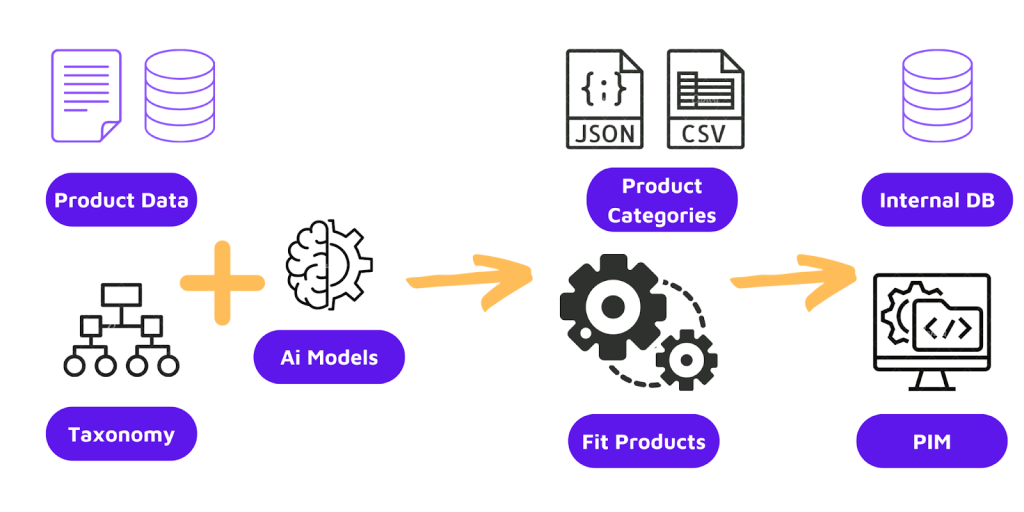
Build Learning Loops into Your Product
Design your product architecture to capture and learn from user behaviour continuously. This does not necessarily require sophisticated machine learning from day one, but it does require thinking about how you will use data to improve your product over time. Products that can improve automatically have significant advantages in maintaining PMF as markets evolve.
Embrace Experimentation at Scale
Invest in capabilities that allow you to test multiple product variations simultaneously. This might involve AI-powered testing platforms, but it definitely requires a culture and infrastructure that supports rapid experimentation. The companies finding PMF fastest in the AI economy are those that can test the most hypotheses most quickly.
Focus on Measurable Value Creation
Ensure that your AI implementations create measurable value for customers, not just impressive technical capabilities. The most successful AI products are those that solve real customer problems more effectively than alternative solutions, rather than those that simply showcase advanced technology.
Plan for Continuous Evolution
Unlike traditional products that might achieve PMF and then focus on scaling, AI-powered products require ongoing attention to maintain and improve their market fit. Plan your organisation and resources accordingly, ensuring you have the capability to continuously refine and improve your AI capabilities as customer needs and competitive landscapes evolve.
The Path Forward
Achieving Product-Market Fit in the AI economy requires a fundamental shift in how we think about product development. It is no longer sufficient to build a great product and find its market; instead, successful companies are building products that can continuously adapt to and shape their markets.
The organisations that will thrive are those that view AI not as a feature to be added to existing products, but as a capability that can fundamentally transform how they understand, serve and evolve with their customers. By embracing this perspective and building the capabilities to support continuous learning and adaptation, businesses can not only achieve PMF but maintain it in an increasingly dynamic marketplace.
The AI economy rewards those who can move quickly, learn continuously and adapt intelligently. For leaders navigating this landscape, the key is not to perfect your AI strategy before starting, but to begin building your organisation’s AI capabilities while staying focused on the fundamental goal of creating products that customers genuinely want and value.
If you need guidance on any of these domains, whether you are building AI based products or services, reach out to us or book our free discovery call. Remember, we are genuinely here for you.