



In the rapidly evolving world of artificial intelligence, one of the biggest challenges businesses face is not just getting AI to work; it’s getting AI to work with their existing systems, data, and tools. Enter Model Context Protocol (MCP), a groundbreaking solution that is changing how AI assistants interact with the digital world around them.
What Exactly Is MCP?
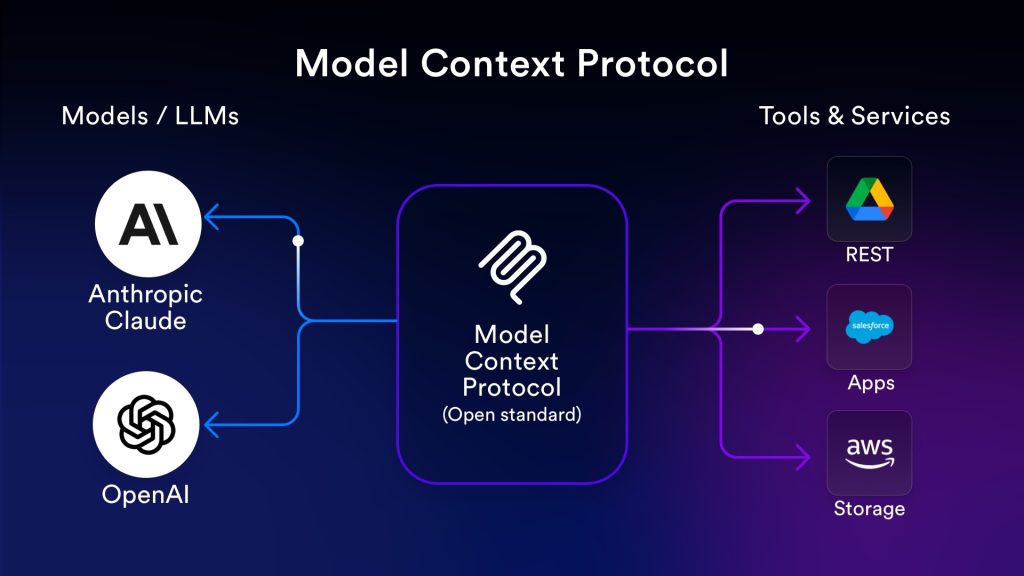
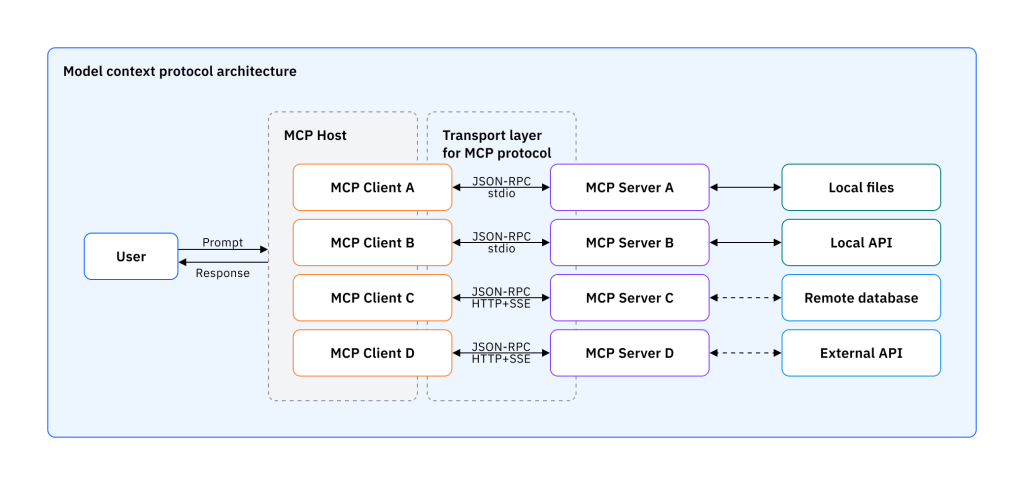
Think of Model Context Protocol as a universal translator between AI assistants and the various systems they need to access. Just as you might need different keys to open different doors in your office building, AI systems traditionally needed different methods to connect with different data sources, applications, and tools.
MCP solves this by creating a standardised way for AI assistants to securely connect to and interact with external resources. Whether it’s your company database, a spreadsheet application, or a project management tool, MCP provides a consistent “language” that AI can use to communicate with all of them.
At its core, MCP enables AI assistants to:
- Access real-time data from various sources
- Execute actions within different applications
- Maintain security while doing so
- Work seamlessly across different platforms and tools
Why Not Use Existing Protocols Like HTTP?
You might wonder why we need another protocol when we already have HTTP, which powers the entire web. It is a fair question, and the answer lies in the specific needs of AI systems.
HTTP was designed primarily for web browsers and web applications; systems where humans are ultimately in control of what happens. When you click a link or submit a form, you are making conscious decisions about what data to send and what actions to take.
 Top article todayExcel-to-App Evolution: Why the Transformation Matters for SME’s
AI assistants, however, operate differently. They need to:
Make Dynamic Decisions: Unlike a simple web request, AI systems need to understand context, make decisions about what data to request, and adapt their approach based on the responses they receive.
Handle Complex Interactions: AI assistants often need to perform multi-step operations that involve reading data, processing it, and then taking actions based on that processing; all within a single conversation or task.
Maintain Context Across Interactions: While HTTP is stateless (each request is independent), AI assistants benefit from maintaining context about ongoing conversations and tasks.
Ensure Security and Permissions: AI systems need more sophisticated permission models than traditional web applications, especially when they’re acting autonomously on behalf of users.
Work with Structured Data: AI assistants work best with structured, predictable data formats, rather than the varied HTML and web content that HTTP typically serves.
MCP addresses these specific requirements by providing a protocol designed from the ground up for AI-to-system communication.
What is the Goal? What Are We Trying to Achieve?
The primary goal of MCP is to break down the silos that currently exist between AI assistants and the tools we use every day. Here’s what we’re trying to achieve:
 Read alsoStrait of Hormuz Chokehold Warning Lessons for Australian Businesses!
As you aim for universal integration and persistent cross-system context, it's useful to consider how state and recall affect those ambitions—especially limits of context windows and the role of persistent memory. For a concrete exploration of why long-term recall matters when MCP connects assistants to enterprise data, see LLM memory is the missing link.
Universal AI Integration
Imagine having an AI assistant that can seamlessly work with your email, calendar, project management software, databases, and file systems without requiring separate integrations for each tool. MCP makes this possible by creating a standard way for AI to connect with any system that supports the protocol.
Enhanced AI Capabilities
By giving AI assistants access to real-time data and the ability to take actions, we are moving beyond simple question-and-answer interactions to AI that can actually help complete tasks. Your AI assistant could check your calendar, find available meeting times, send invitations, and update project timelines; all in response to a simple request like “schedule a team meeting for next week.”
Improved Security and Control
MCP includes built-in security features that allow organisations to control exactly what an AI assistant can and cannot access. This means you can give your AI helpful capabilities without compromising sensitive data or risking unauthorised actions.
Reduced Development Complexity
For developers and businesses, MCP significantly reduces the complexity of building AI-powered applications. Instead of creating custom integrations for every tool and data source, developers can focus on building great AI experiences while MCP handles the connectivity.
Get the best ones in your inbox — no spam, unsubscribe any time.
How Can Businesses Benefit from MCP?
The business applications of MCP are vast and varied. Here are some key ways organisations can benefit:
Streamlined Operations
Customer service teams could use AI assistants that access customer databases, order systems, and knowledge bases simultaneously. When a customer calls with a question, the AI could instantly pull up their account, check their order status, and provide personalised recommendations; all without the representative needing to switch between multiple systems.
Enhanced Decision Making
Sales teams could benefit from AI assistants that combine data from CRM systems, market research databases, and financial forecasting tools to provide comprehensive insights during client meetings. The AI could analyse trends, suggest pricing strategies, and even identify cross-selling opportunities in real-time.
Automated Workflows
Administrative tasks that currently require human intervention could be automated more effectively. An AI assistant could monitor project management tools, automatically update status reports, schedule follow-up meetings, and send notifications to relevant team members based on project milestones.
Improved Data Analysis
Instead of manually exporting data from various systems and combining it in spreadsheets, teams could ask AI assistants to analyse data across multiple sources simultaneously. The AI could identify patterns, generate reports, and even suggest actionable insights based on the combined data.
Better Customer Experiences
E-commerce businesses could deploy AI assistants that access inventory systems, customer purchase history, and product databases to provide highly personalised shopping experiences. The AI could suggest products, check availability, and even process orders through natural conversation.
Getting Started with MCP: A Conceptual Foundation
If you’re interested in exploring MCP for your business, here is how to think about getting started:
 Read alsoWhy Most Australian SMEs Use Only 20% of What They Are Paying For Zoho CRM
Assess Your Current Systems
Begin by mapping out the various tools, databases, and applications your team currently uses. Consider which systems contain data that would be valuable for AI analysis and which tools could benefit from AI-powered automation.
Identify Use Cases
Think about specific scenarios where AI could add value by connecting multiple systems. Start with simple use cases like an AI assistant that can check calendars and send meeting reminders, before moving to more complex integrations.
Understand Your Data
Consider what data you would be comfortable sharing with AI assistants and what restrictions you would need to implement. MCP supports granular permissions, so you can start with limited access and expand as you become more comfortable with the technology.
Plan for Implementation
While you do not need to understand the technical details of MCP implementation, it is helpful to work with developers or technical partners who understand the protocol. They can help you design integrations that align with your business needs and security requirements.
Start Small and Scale
Consider beginning with a pilot project that connects AI to just one or two systems. This allows you to understand the benefits and challenges before expanding to more comprehensive integrations.
The Future of AI Integration
Model Context Protocol represents a significant step forward in making AI assistants truly useful for business applications. By providing a standardised, secure way for AI to interact with existing systems, MCP opens up possibilities that were previously complex or impossible to achieve.
As more tools and platforms adopt MCP, we can expect to see AI assistants that are genuinely helpful partners in our daily work: not just answering questions, but actively helping us accomplish tasks across all the systems and tools we rely on.
The key to success with MCP lies in starting with clear use cases, maintaining appropriate security controls, and gradually expanding AI capabilities as your organisation becomes more comfortable with the technology. With the right approach, MCP can transform how your business operates, making AI a truly integrated part of your workflow rather than just another tool to manage.
With FUZN, you can upscale your AI operations with AI integration. We use state of the art technologies to ensure your AI usage scales with your needs. Get in touch with us today to kick off.